
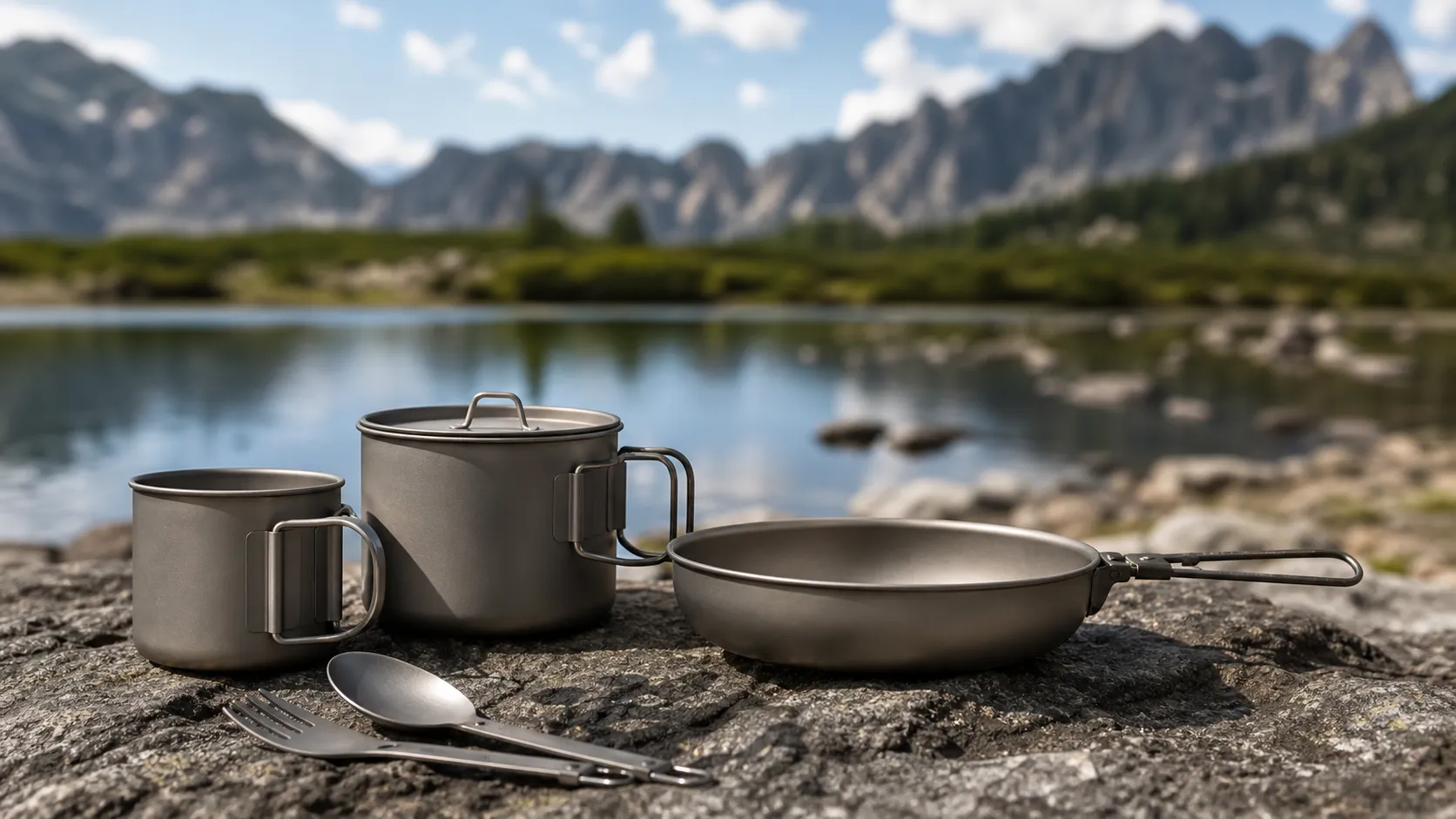
Grade 1 Titanium vs. Stainless Steel and Aluminum
No verified product information, material specifications, purity data, performance claims, or manufacturing details are available from the referenced page. Details regarding TA1 pure titanium, 99.6% purity, weight savings, corrosion resistance, food-contact use, heat behavior, or comparisons with stainless steel and aluminum cannot be confirmed.
Titanium Outdoor Accessories for Camping and Backpacking
Pack weight matters, but so does carrying gear that works together. I build a practical titanium outdoor accessories system around a few compact essentials: a cooking vessel, drinkware, cutlery, and only the small hardware needed for the trip.
For a simple backpacking setup, start with titanium camping pots that fit your stove, cup, and food storage plan. A nesting layout keeps loose items together and helps free up space inside the pack.
Match Gear to the Trip
- Ultralight backpacking: Prioritize a compact pot, lightweight cup, long-handle spoon, and minimal shelter hardware.
- Camping with others: Choose capacity that suits shared meals instead of carrying several small pieces.
- Bushcraft use: Focus on durable cooking and fire-related accessories that suit longer time outdoors.
- Everyday carry: Keep titanium EDC accessories limited to useful items, such as clips, bottle openers, or key tools.
Before packing, consider trip length, group size, terrain, cooking style, and available pack volume. The best titanium gear system is not the largest one—it is the one that covers daily needs without duplicate tools or unused weight.
Titanium Cookware and Drinkware
Product-specific information for titanium cookware, drinkware, pot sizes, cup construction, canteens, flasks, French presses, and nesting mess kits is not available in the provided reference content.
Titanium Camping Cutlery and Camp Kitchen Tools
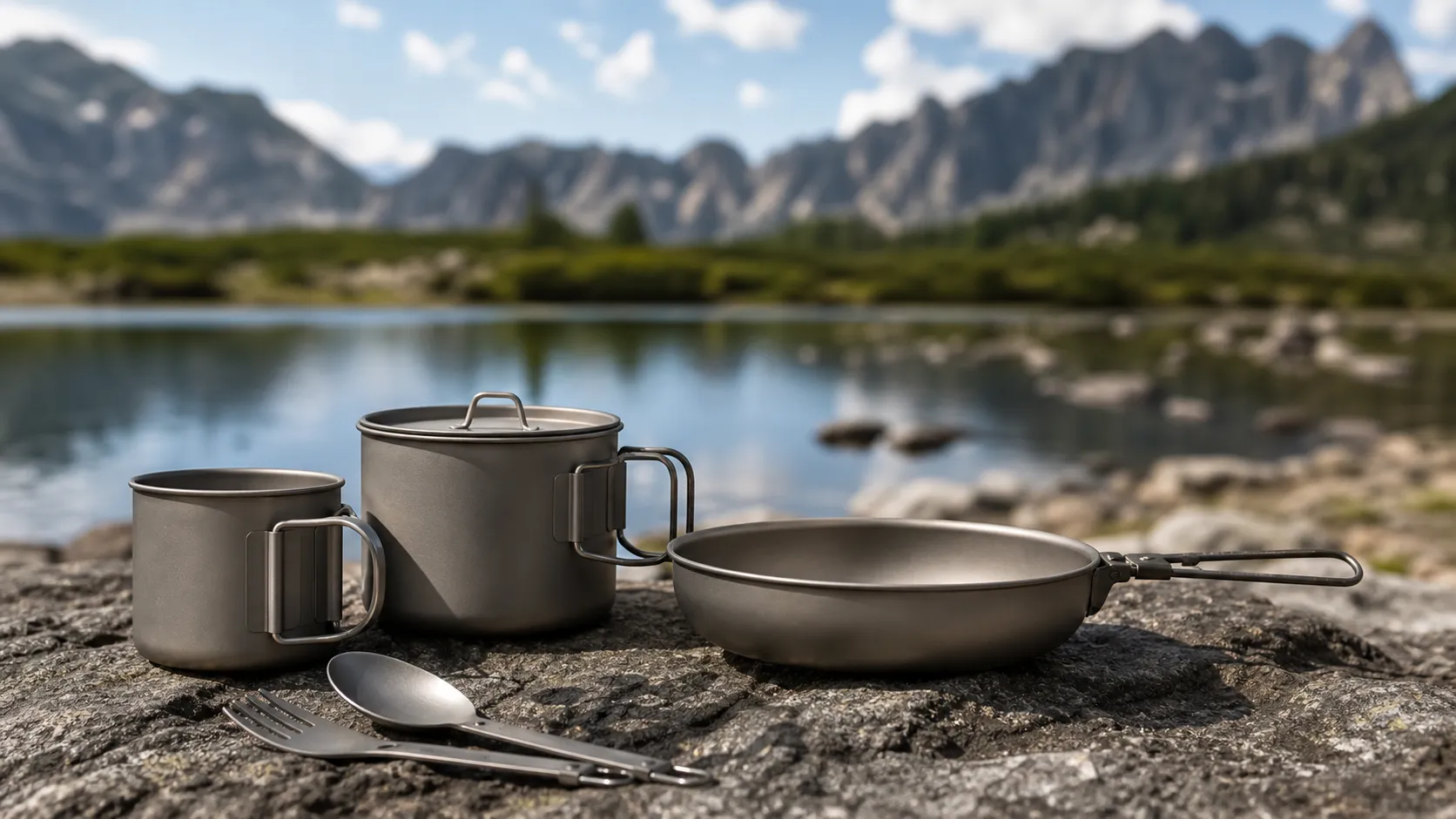
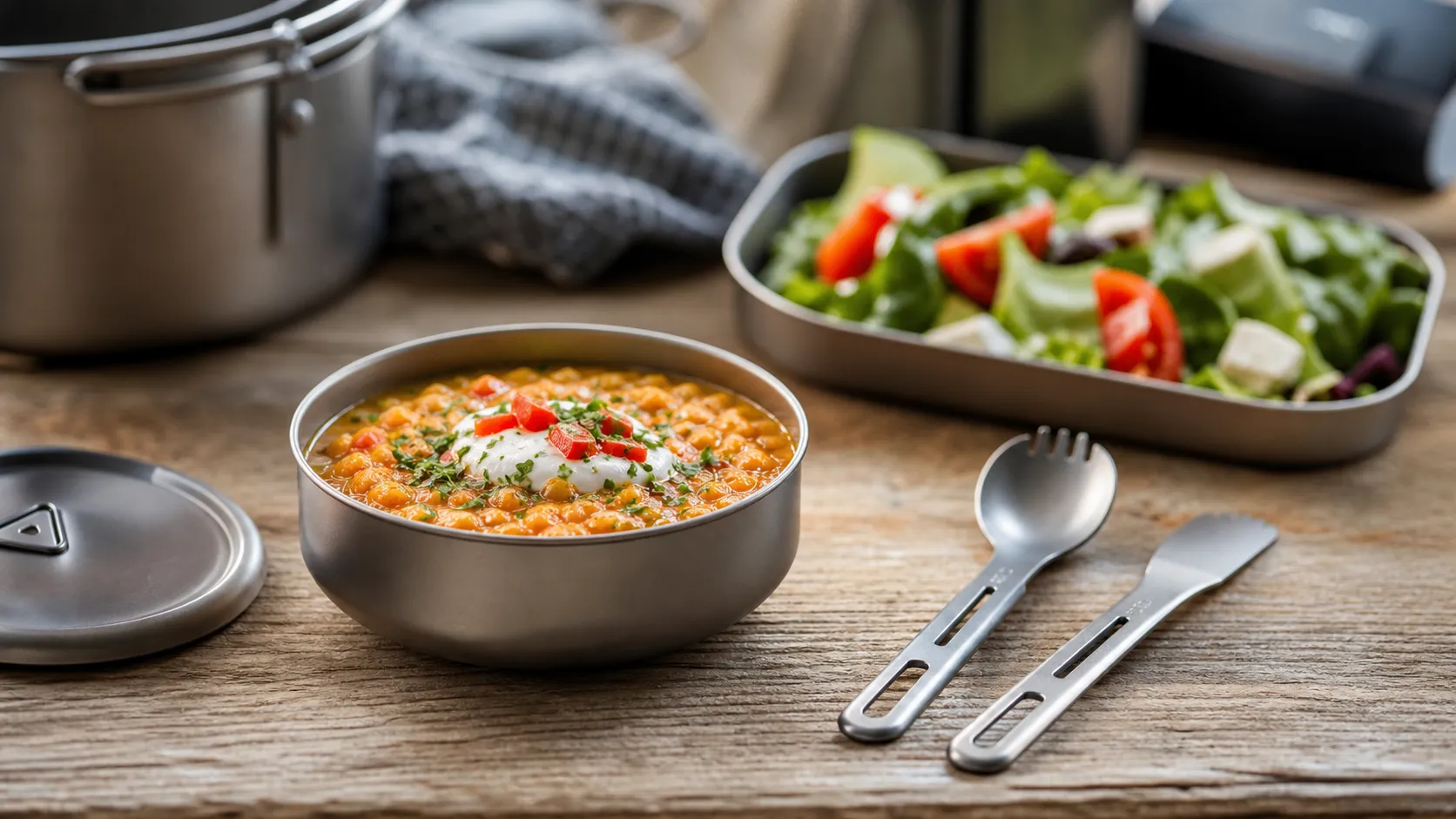
For lightweight trail meals, I keep titanium outdoor accessories simple: one spoon or spork, plus only the tools that match my cooking plan. A compact titanium cutlery and tools range helps keep camp kitchen gear organized without filling a pack with duplicates.
| Meal Style | Practical Titanium Cutlery | Packing Priority |
|---|---|---|
| Freeze-dried meals | Long-handle spoon | Reaches deep meal pouches cleanly |
| Simple trail food | Spork or fork | One tool for fast meals |
| Camp cooking | Tongs or cooking tools | Useful for handling hot food |
| Shared meals | Compact multi-piece set | Easier to divide between users |
| Tea or coffee breaks | Chopsticks or small spoon | Keep only what you will use |
Long Handles and Compact Sets
A long-handle titanium spoon is the practical choice for deep food pouches, helping keep hands cleaner around hot meals. For short trips, folding sporks, forks, and chopsticks can reduce packed length while still covering basic eating needs.
Choose cutlery based on the real space in your cook kit. A simple setup is usually more useful than several overlapping utensils.
- Long handles: Better for pouches and taller pots
- Short handles: Easier to store in small mess kits
- Folding designs: Compact, but check hinges before each trip
- Multi-piece sets: Useful for group meals, less necessary for solo travel
Campfire Kitchen Tools
Titanium tongs, grill plates, and small cooking tools can suit campfire meals where a spoon alone is not enough. I pack these only when the trip includes grilling or handling food over heat; for a basic backpacking meal, they can add unnecessary bulk.
After cooking, clean utensils with water and a soft cloth or sponge when available. For food-related titanium gear, confirm the maker’s intended food-contact use and avoid damaged surfaces, loose parts, or difficult-to-clean joints.
Titanium Tent Stakes and Shelter Gear
Titanium outdoor accessories for shelter setup should be chosen by ground condition, tent design, and verified product details. Check the stated dimensions, quantity, and intended use before packing.
| Campsite condition | Stake selection focus |
|---|---|
| Hard ground | Choose stakes designed to handle firm soil without forcing them |
| Loose soil | Prioritize secure hold and use the tent’s recommended anchoring method |
| Sand or snow | Use shelter anchors intended for soft ground conditions |
| Windy campsites | Carry the full required stake count and secure all guylines |
V-Shaped vs. Shepherd-Hook Stakes
V-shaped titanium tent stakes and shepherd-hook styles have different profiles. Select the style based on the ground you expect, the shelter’s attachment points, and the manufacturer’s stated application.
Guyline Adjusters and Small Hardware
Titanium guyline adjusters, hooks, clips, and similar camp hardware can keep a shelter setup organized. Keep these small pieces in a dedicated pouch so they do not get lost inside your pack.
How Many Titanium Tent Pegs to Carry
Carry the number required for your tent or tarp, plus a small reserve for repairs or changed campsite conditions. Include extra pegs when your shelter uses multiple guylines or when exposed weather is likely.
Safe Stake Use
- Push stakes into suitable ground instead of striking them unnecessarily.
- Avoid forcing ultralight tent stakes through rocks or very hard soil.
- Keep stakes visible with bright cord or a storage bag to reduce losses.
- Inspect bent stakes, damaged hooks, and worn guylines before each trip.
- Replace damaged shelter hardware when it no longer fits or holds securely.
Titanium Stoves, Windshields, and Fire Accessories
Product-specific details for titanium micro stoves, twig stoves, alcohol stove accessories, pot supports, windshields, and fire accessories are not available in the provided reference content.
For available product-category information, see the outdoor stoves and barbecue collection.
Titanium EDC Tools and Small Outdoor Accessories
For daily carry, I keep titanium outdoor accessories focused on small jobs: holding keys, clipping a bottle, opening a drink, or keeping essential items together. The best pieces add clear function without turning a pocket, belt loop, or pack strap into unnecessary weight.
Practical Titanium EDC Pieces
Common compact options include:
- Non-climbing titanium carabiners for keys, bottles, gloves, and light gear attachment
- Titanium key organizers to reduce key noise and pocket bulk
- Bottle openers, whistles, clips, and small utility tools for simple everyday use
- Anodized titanium EDC tools with color finishes that make individual items easier to identify
Anodized finishes can add personal color without paint, though regular use can still leave scratches and marks over time. I choose simple shapes, secure gates, and tools that serve more than one practical purpose.
Non-Climbing Carabiner Safety
A titanium EDC carabiner is not climbing hardware unless it is clearly rated and certified for that use. Non-rated carabiners must never be used for climbing, rappelling, load-bearing rescue, or securing people.
Use them only for light everyday items such as:
- Keys and key rings
- Water bottles
- Small pouches
- Gloves, hats, and light camp items
- Gear organization on a pack
For compact carry setups and practical product direction, our outdoor kit projects show how small accessories can fit into a more organized gear system. Function, safety limits, and low bulk matter more than carrying extra tools.
How to Choose Titanium Outdoor Accessories
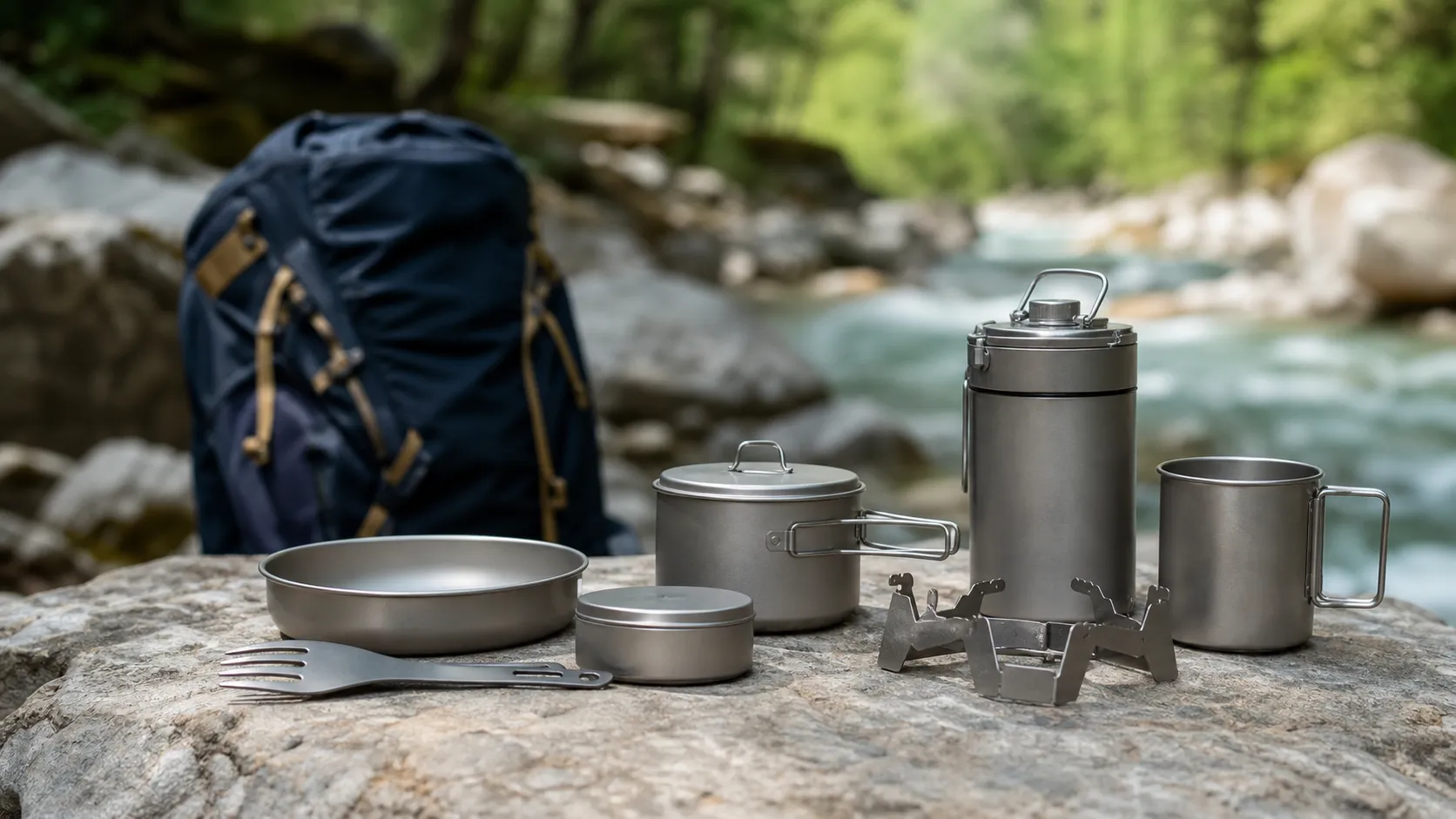
I choose titanium outdoor accessories by matching each item to the trip, not by buying the lightest option by default. For practical selection criteria, use our outdoor gear buying guides alongside the product’s stated specifications.
| Activity | Priority to Check |
|---|---|
| Ultralight backpacking | Actual weight, compact nesting, simple design |
| Car camping | Capacity, handles, lid fit, easy storage |
| Overlanding | Durability, modular packing, usable capacity |
| Bushcraft | Heat compatibility, field handling, replacement parts |
| EDC | Size, attachment method, intended safety use |
Weight and Wall Thickness
Weight savings matter most when I carry gear for long distances. Compare the listed weight against how often the item will be used; a higher-cost titanium item should replace heavier gear or serve several useful functions.
| Wall Thickness | What to Compare |
|---|---|
| 0.3 mm | Listed weight, shape retention, intended use |
| 0.5 mm | Listed durability, weight increase, pack space |
Fit, Nesting, and Daily Use
A titanium pot, cup, stove, or mess kit should fit with the rest of the system. Check nesting compatibility with fuel canisters, cups, lids, and storage bags before packing.
- Handles: secure grip and convenient folding design
- Lids: proper fit and easy removal
- Capacity marks: clear and useful for meal or water portions
- Storage bags: help limit scratches, rattling, and lost parts
- Dimensions: must suit the available pack space
Materials and Finish
Confirm the material claim before purchase. If a product is described as TA1 pure titanium or food-grade titanium, review the stated material details rather than relying on unclear labels.
| Finish | Selection Focus |
|---|---|
| Sandblasted | Surface texture and everyday appearance |
| Polished | Surface appearance and visible marks |
| Matte | Low-glare finish and handling preference |
| Anodized | Color finish and intended application |
Buying Checklist
Before choosing titanium outdoor accessories, confirm:
- Actual item weight
- Capacity and dimensions
- Wall thickness
- Heat compatibility
- Nesting compatibility
- Material designation, including TA1 claims
- Included accessories and storage
- Warranty terms
Titanium Manufacturing and Quality Standards
Reliable titanium outdoor accessories depend on consistent material selection, forming, welding, and finishing. For cookware, tent hardware, and compact tools, precise production helps parts fit properly, pack neatly, and hold up to regular outdoor use.
Details That Matter in the Field
- Smooth welds help reduce rough areas that are harder to clean or more likely to catch on packed gear.
- Rolled or finished edges make cups, pots, and cutlery more comfortable to handle.
- Accurate dimensions support dependable nesting between cookware, lids, cups, and storage components.
- Consistent wall thickness affects the balance between low weight and everyday durability.
- Corrosion-resistance checks help confirm that titanium gear is suitable for wet, humid, and demanding outdoor environments.
We treat quality inspection as a practical part of product reliability, with attention to material consistency, dimensions, surface finish, and structural details. Our approach to quality inspection for titanium products supports more consistent titanium outdoor accessories across production runs.
OEM and ODM Titanium Gear
For camping brands and private-label lines, OEM and ODM production can support customized titanium cookware, drinkware, cutlery, tent stakes, and small outdoor hardware. Useful options may include product dimensions, finishes, branding, packaging, and modular set configurations.
Direct manufacturer coordination keeps customization closer to the production process and helps maintain consistency from samples through larger orders. Our titanium product customization options are built around practical outdoor use, clear specifications, and repeatable quality.
Titanium Gear Care and Maintenance
I keep titanium outdoor accessories clean, dry, and packed securely to protect their long-term performance. Basic field care also helps prevent burned food, loose parts, bent tent stakes, and unnecessary pack noise.
Field Cleaning
Clean titanium cookware, cups, cutlery, and tent stakes with water and a soft cloth or non-abrasive sponge. For grease or food residue, use mild soap when available, then rinse and dry before packing.
- Soak pots with stuck-on food before scrubbing.
- Wipe soot from the outside of cookware after it has cooled.
- Remove mud and sand from titanium tent stakes before storage.
- Use a soft brush for mineral deposits around cup rims, lids, and threads.
- Avoid harsh abrasives that can leave visible scratches.
Burned Food and Heat Marks
Thin-wall titanium cookware heats quickly, so food can scorch if heat is too high or the pot runs dry. I use low heat, add enough water or oil, stir often, and place the pot on a stable stove surface.
Rainbow coloring can appear after heating titanium. This is a heat-related surface change and is generally harmless; it does not automatically mean the cookware is damaged.
Storage and Inspection
Pack titanium cups, cutlery, cookware, and small hardware in a storage bag or inside a nesting camp mess kit. This reduces scratches, rattling, and the chance of losing small accessories in a backpack or vehicle.
Before each trip, inspect your titanium outdoor accessories for:
- Bent tent stakes that no longer hold securely
- Damaged welds on cookware, handles, or hardware
- Loose clips, hooks, or worn accessory components
- Sharp edges, cracks, or parts that no longer fit correctly
Replace damaged parts rather than forcing them back into service. Careful cleaning, controlled cooking heat, and organized storage keep titanium gear ready for repeated outdoor use.
Titanium Outdoor Accessories FAQs
| Topic | Answer |
|---|---|
| Titanium vs. stainless steel value | Material comparisons, pricing, and long-term performance details are not specified. |
| Grade 1 titanium for food and drinks | Food-contact suitability for cooking, coffee, acidic foods, and alcohol is not specified. |
| Metallic taste | Taste neutrality in water or food is not specified. |
| Burned food in titanium cookware | Cooking performance and heat-use guidance are not specified. |
| Single-wall vs. double-wall cups | Construction, insulation, and direct-heat compatibility details are not specified. |
| Titanium tent stakes vs. aluminum | Strength and soil-performance comparisons are not specified. |
| Titanium carabiners for climbing | Load ratings and climbing or rappelling suitability are not specified. |
| Rainbow discoloration | Cleaning methods and discoloration guidance are not specified. |
| Recommended titanium thickness | Wall-thickness options and durability guidance are not specified. |
| Anodized titanium safety | Anodized finishes and food-related use information are not specified. |
 Chinese