
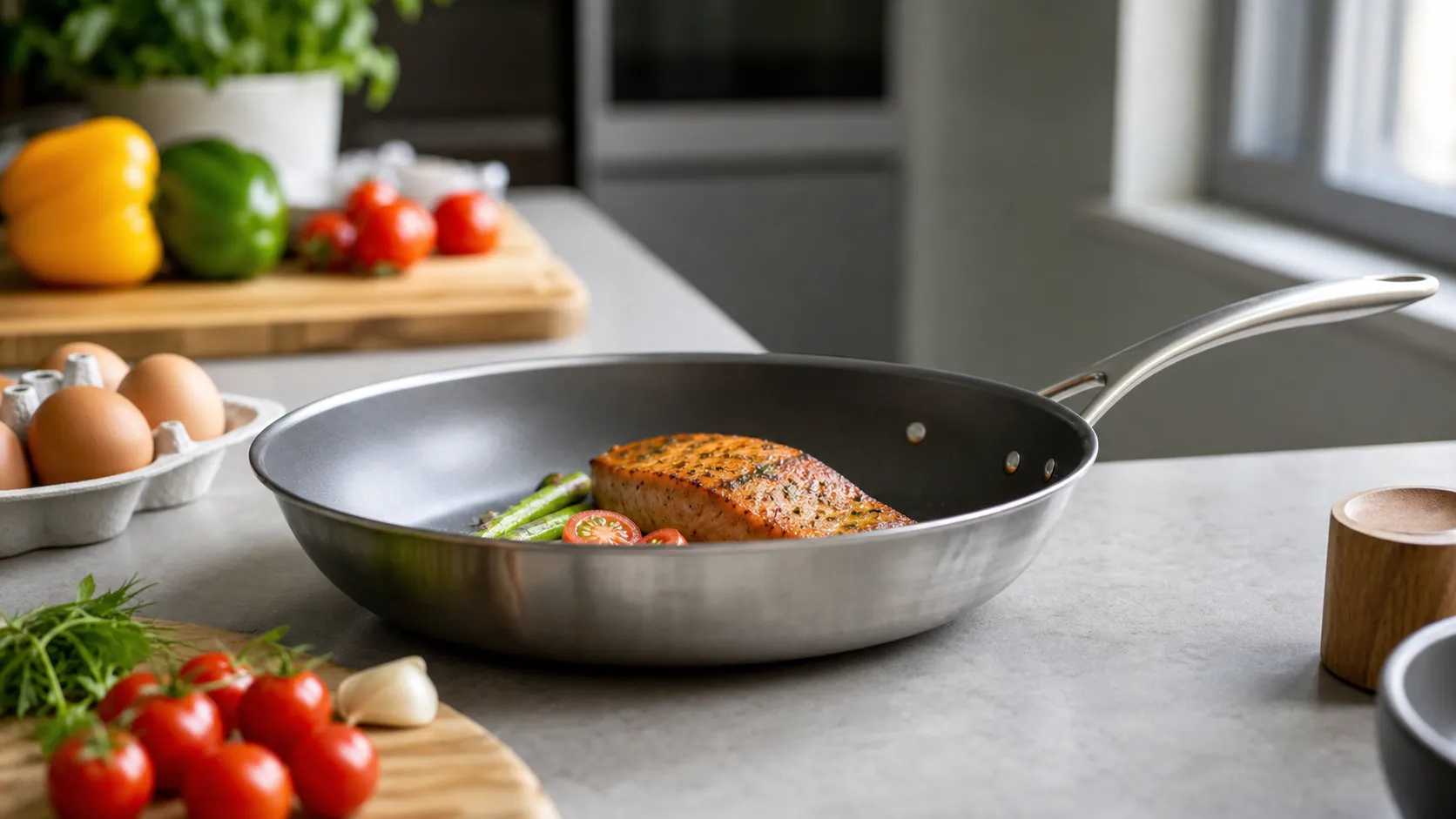
What Is a Titanium Frying Pan?
A titanium frying pan is cookware made with titanium as a primary material, a structural component, or a reinforcing layer. The term can describe several pan constructions, so the material description matters more than the name alone.
Titanium is valued for its light weight, strength, and resistance to corrosion. In cookware, it may be used on its own or combined with materials such as stainless steel to support practical everyday cooking.
Pure Titanium vs. Titanium-Coated Cookware
Pure titanium cookware uses titanium as the main body material. It is lightweight, durable, and naturally resistant to rust and corrosion. Its cooking behavior differs from conventional nonstick cookware, particularly when it comes to food release and heat response.
Titanium-coated cookware has a titanium-based surface or reinforcement over another pan material. The underlying construction can affect durability, heating performance, and care requirements. A titanium frying pan should always be evaluated by its full material composition rather than its label alone.
How Titanium Cookware Works
Titanium cookware works by combining a durable cooking surface with a lightweight structure. Depending on the pan design, titanium may provide strength and corrosion resistance while other materials support heat distribution.
For consistent performance, use a heat setting suited to the pan’s construction and follow the manufacturer’s care guidance. A well-made titanium frying pan is designed to provide dependable cooking performance with lasting material integrity.
Key Benefits of Titanium Frying Pans
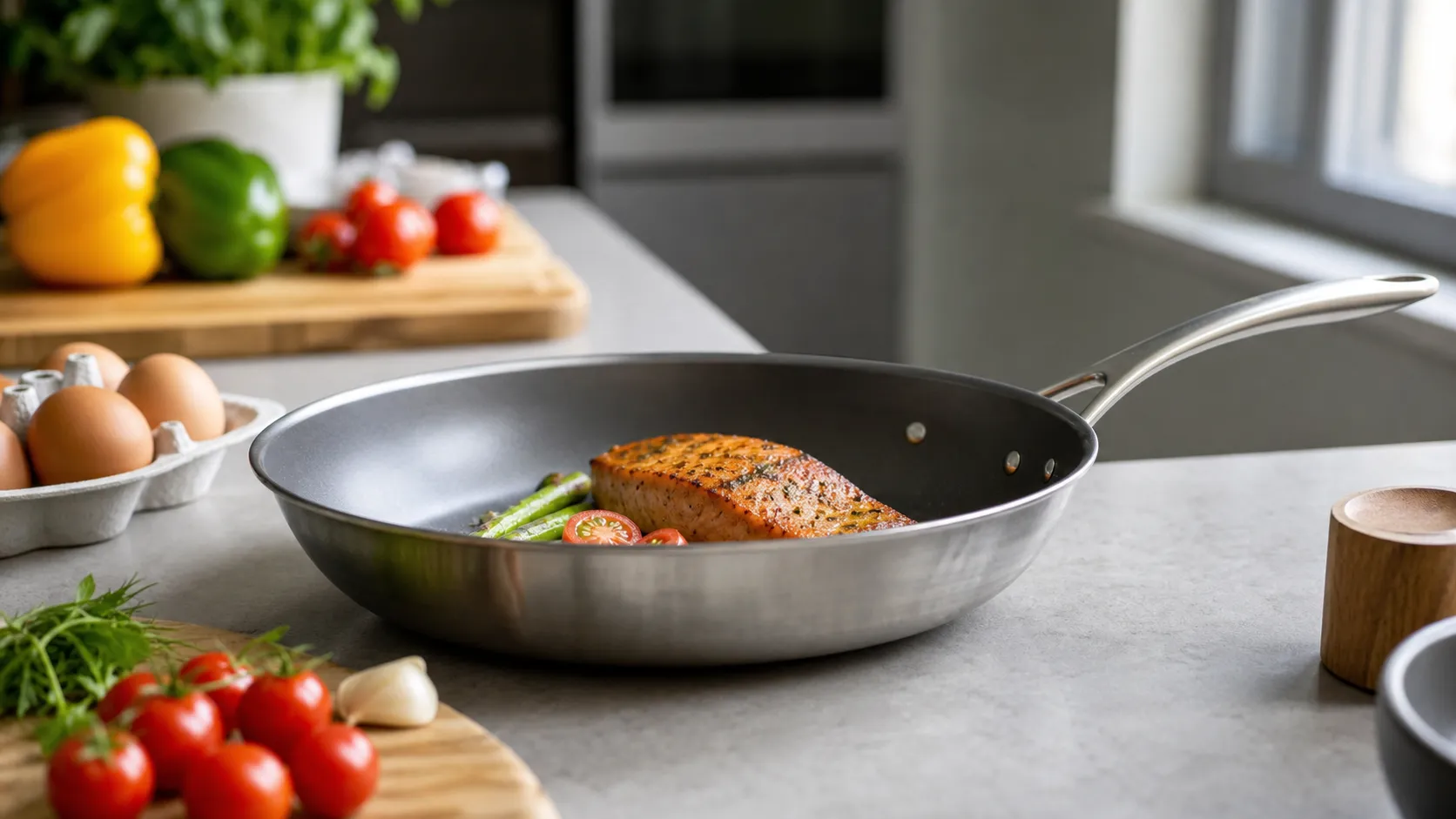
The benefits of a titanium frying pan depend on its material composition, surface design, and construction. Pure titanium, coated cookware, and titanium-reinforced pans can offer different cooking experiences.
Non-Toxic Cooking with Coating-Free Durability
A coating-free design avoids reliance on a separate nonstick layer. However, the pan’s safety and suitability for daily cooking should always be confirmed through its material and care information.
Lightweight Design and Exceptional Strength
Titanium cookware is commonly chosen for its balance of lightness and strength. The actual weight and durability depend on the pan’s thickness and construction.
Superior Heat Distribution and Performance
Heat performance varies by design. A titanium frying pan with additional metal layers may heat differently from a pure titanium skillet, so construction details are important when comparing options.
Resistance to Corrosion and Scratching
Titanium is valued for its durable surface and resistance to corrosion. Scratch resistance still depends on the pan’s finish, cooking tools, cleaning method, and overall construction.
| Benefit to consider | What to check |
|---|---|
| Coating-free cooking | Material and surface details |
| Lightweight handling | Pan thickness and total weight |
| Heat performance | Layered or reinforced construction |
| Long-term durability | Finish, care instructions, and cookware design |
Types of Titanium Frying Pans
Titanium frying pans generally fall into three categories. The main difference is whether titanium is the primary material, part of a coating, or combined with another metal.
Pure Titanium Skillets
A pure titanium skillet is made primarily from titanium. It offers a simple material profile for buyers who want coating-free cookware. I recommend checking the product description carefully to confirm whether the pan is pure titanium or a titanium alloy.
Nonstick Titanium-Coated Pans
A titanium-coated pan uses titanium as part of its surface or coating system. Its cooking properties depend on the complete coating construction, so terms such as nonstick, PFAS-free, or PFOA-free should only be accepted when clearly stated by the manufacturer.
Titanium-Reinforced Stainless Steel Pans
These pans combine titanium with stainless steel or another metal. The final performance depends on the material composition and construction. Buyers comparing options should review details such as the steel grade, layer structure, and intended cooktop use. For related cookware, our titanium nesting cookware sets provide another format to consider.
How to Choose the Best Titanium Frying Pan
A titanium frying pan should be selected based on clear product information, intended use, and practical handling. We focus on material transparency, usable dimensions, compatibility details, and build quality before making a decision.
Material Composition and Safety
Check how titanium is used in the pan. Product descriptions may refer to pure titanium, titanium-coated cookware, composite titanium, or titanium-reinforced stainless steel. These are different constructions and should not be treated as the same product.
| What to Check | Why It Matters |
|---|---|
| Material description | Clarifies whether titanium is the main material or part of a layered design |
| Coating information | Helps identify the cooking surface and care needs |
| Safety documentation | Supports informed choices for daily cooking |
| Manufacturing details | Provides a clearer view of quality control and finish standards |
For cookware development, clear material specifications are essential. Our cookware brand solutions support product-focused sourcing and manufacturing requirements.
Size, Depth, and Capacity
Choose a titanium frying pan size that matches the meals you cook most often. A compact skillet works well for smaller portions, while a wider pan gives more room for family meals or batch cooking.
- Smaller pans: Suitable for quick meals and limited cooking space
- Medium pans: A practical everyday option for many kitchens
- Larger pans: Better for larger portions and broader cooking surfaces
- Deeper sides: Useful when ingredients need more space during cooking
A balanced size and depth make the pan easier to use, clean, and store.
Cooktop Compatibility and Oven Safety
Always review the product specifications before buying a titanium frying pan. Compatibility can vary by construction, base material, handle design, and finish.
| Feature | Check Before Purchase |
|---|---|
| Cooktop use | Confirm compatibility with your cooktop type |
| Induction use | Look for an induction-ready base where needed |
| Oven use | Confirm the stated oven-safe temperature and handle limits |
| Lid compatibility | Check whether a lid is included or designed for the pan |
| Care instructions | Follow the manufacturer’s stated use and cleaning guidance |
Material selection and surface finishes should be clearly defined, especially for products intended for different global markets. Our materials and finishes approach helps keep these choices aligned with product requirements.
Ergonomics and Handle Quality
A titanium frying pan should feel stable and controlled in the hand. Handle shape, attachment, balance, and heat guidance all affect daily use.
Look for:
- A secure handle connection
- A comfortable grip
- A balanced pan weight
- Clear handling and heat-use instructions
- A design that fits available kitchen storage
The best titanium frying pan is not defined by one label alone. It is a pan with transparent material information, suitable dimensions, confirmed compatibility, and a handle built for regular use.
Care and Maintenance for Titanium Cookware
Cleaning and Dishwasher Guidelines
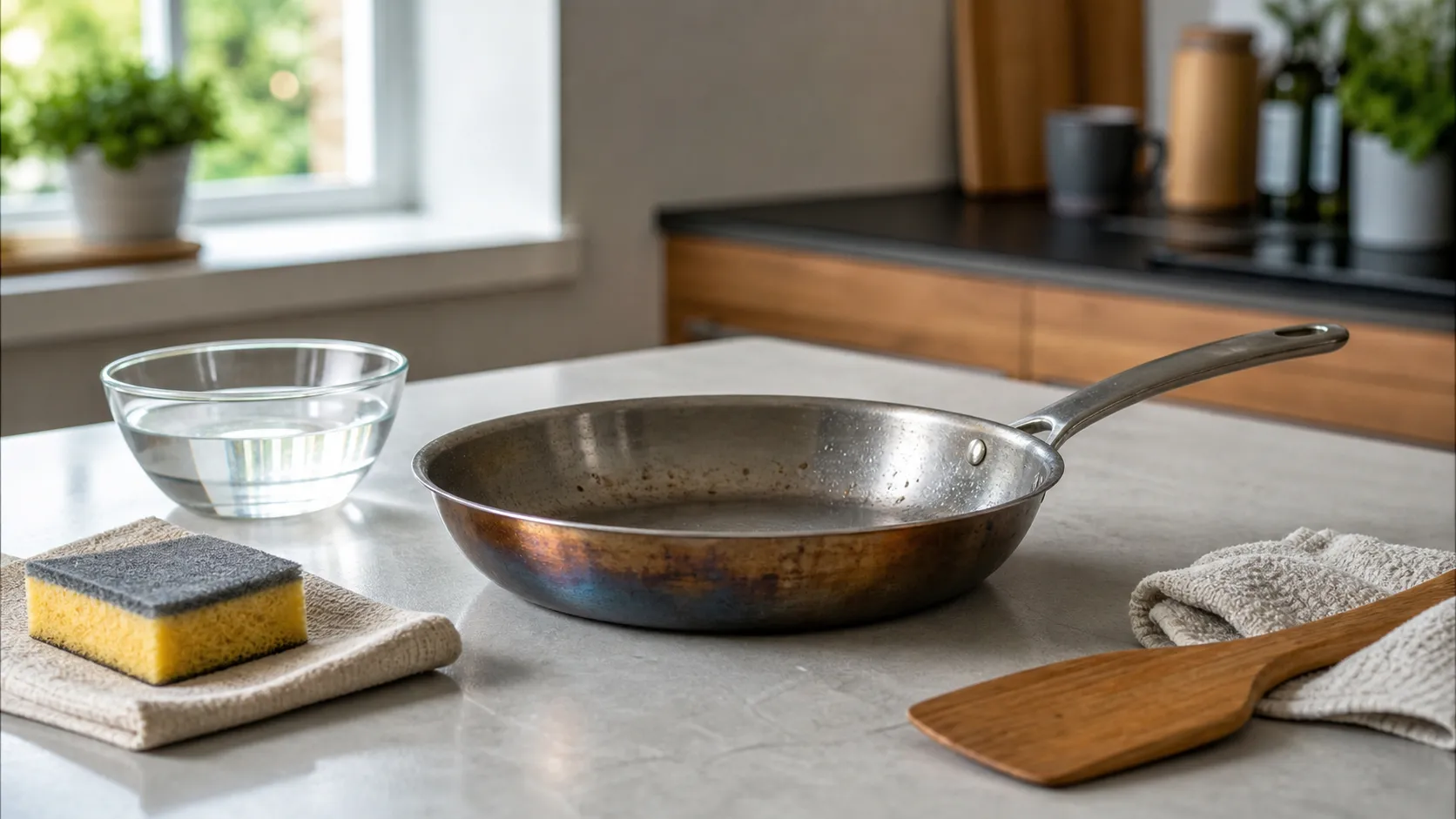
I recommend cleaning a titanium frying pan after each use with warm water, mild dish soap, and a soft sponge. Avoid abrasive tools unless the manufacturer confirms they are suitable. Use dishwasher cleaning only when the product instructions specifically allow it.
Preventing Stains and Heat Discoloration
To help keep the pan looking its best, remove food residue soon after cooking and avoid leaving moisture or sauces on the surface for long periods. Follow the care instructions supplied with your titanium cookware, as cleaning and heat guidance may vary by material composition.
Storage and Long-Term Care Tips
Dry the pan fully before storage and keep it in a clean, dry cupboard. Avoid placing heavy cookware directly on its surface when possible. For product-specific care information, review our titanium cookware collection.
Frequently Asked Questions
Are titanium frying pans safe for daily cooking?
A titanium frying pan can be suitable for everyday cooking when its material composition and use instructions are clearly stated. We recommend checking the product details for the cooking surface, care requirements, and cooktop compatibility before regular use.
Is pure titanium naturally nonstick?
Pure titanium is not automatically a nonstick cooking surface. Food release depends on the pan's finish, cooking method, heat level, and the amount of oil used. A titanium-coated skillet may use a separate nonstick layer, so its care guidance should be followed closely.
Are titanium frying pans worth the investment?
A titanium frying pan can be a practical choice for buyers who value lightweight cookware, corrosion resistance, and durable construction. The right option depends on the pan's material build, intended cooking style, and long-term care needs. For product-specific information, contact us through our titanium cookware quotation request.
 Chinese