
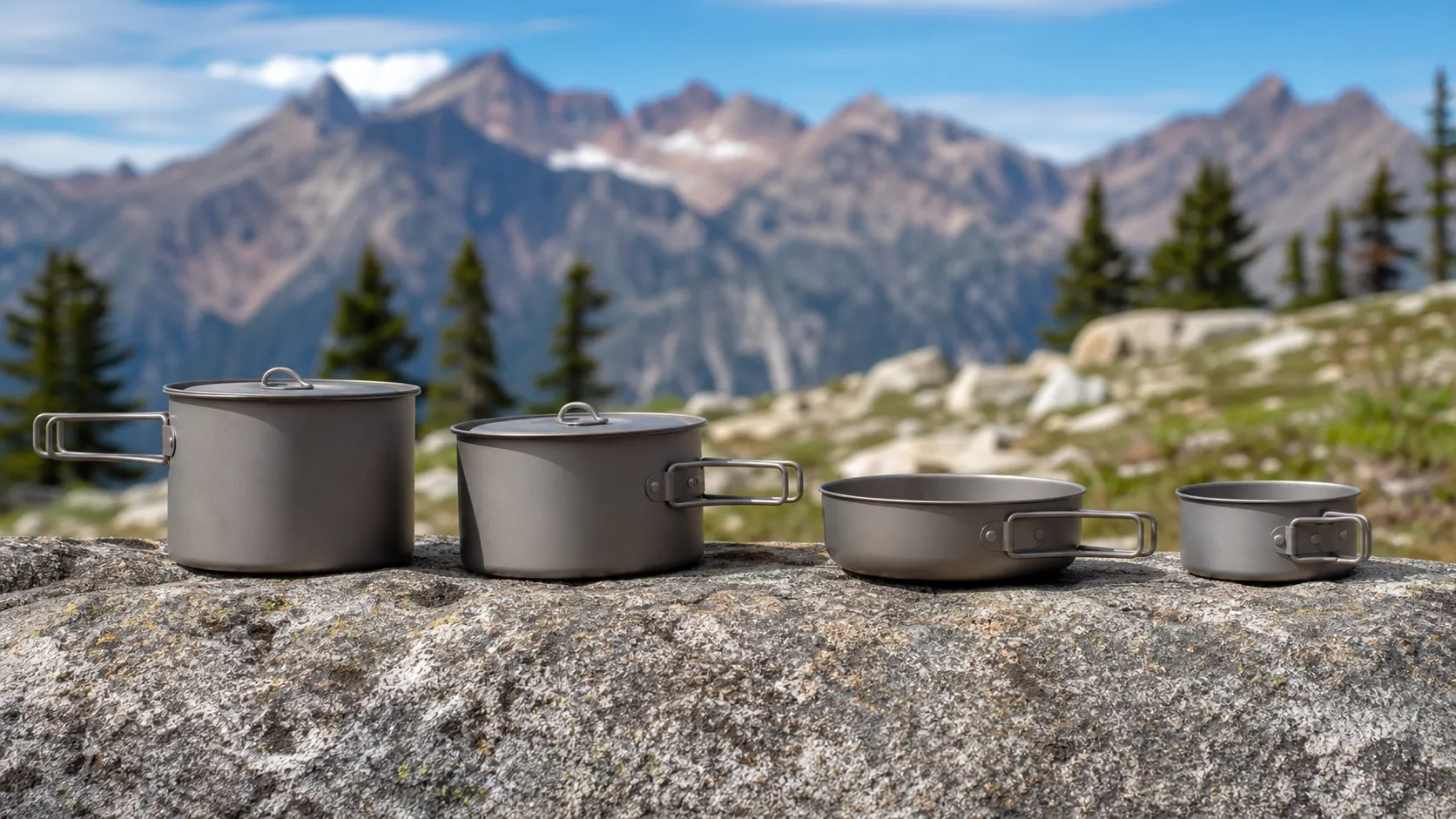
Why Choose Titanium Camping Cookware for Backpacking?
Titanium camping cookware keeps a backpacking kitchen simple: low bulk, dependable material, and a clean-tasting cooking experience. We see it as a strong fit for hikers who want to reduce pack weight without relying on fragile camp pots.
| Backpacking Need | Titanium Benefit |
|---|---|
| Lower pack weight | Lightweight cookware for compact kits |
| Repeated outdoor use | Strong material for backcountry travel |
| Wet or humid conditions | Naturally corrosion-resistant |
| Clean food contact | Non-toxic and biocompatible material |
| Better-tasting drinks and meals | Does not easily leave a metallic taste |
Lightweight, Durable Backcountry Gear
Every gram matters on long hikes. Titanium cookware offers a practical balance between low weight and everyday durability, making it useful for boiling water, preparing simple meals, and carrying a compact cookset through changing trail conditions.
Corrosion-Resistant and Non-Toxic
Titanium resists corrosion, which is valuable when cookware is exposed to moisture, steam, rain, and frequent washing. Its non-toxic, biocompatible nature also makes titanium camping cookware a reliable choice for food and drink contact.
No Strong Metallic Taste
Titanium has a neutral cooking surface that helps preserve the natural taste of water, coffee, and trail meals. For backpackers who dislike the metallic flavor sometimes associated with camp cookware, titanium provides a cleaner experience.
Titanium Camping Cookware vs Aluminum vs Stainless Steel
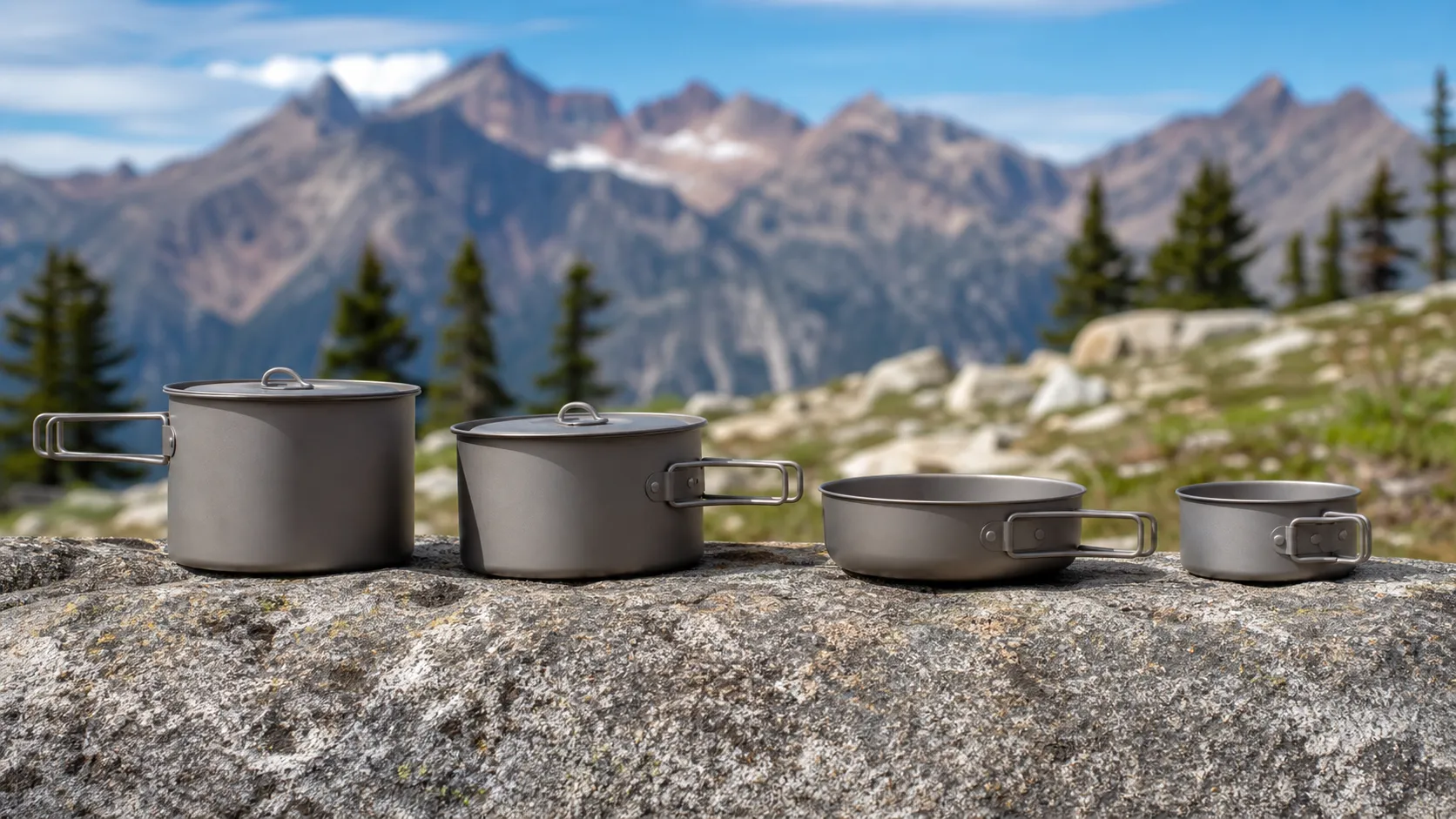
When we compare titanium camping cookware, aluminum, and stainless steel, the best choice depends on how you cook, carry, and travel.
| Material | Heat Performance | Weight | Durability | Best Fit |
|---|---|---|---|---|
| Titanium | Heats quickly but can develop hot spots | Very low | High corrosion resistance | Ultralight boiling and simple meals |
| Aluminum | More even heat distribution | Low | Can dent or wear over time | Simmering and varied camp meals |
| Stainless Steel | Slower, steadier heating | Higher | Strong and rugged | Frequent use and tougher cooking tasks |
Heat Distribution
Aluminum generally spreads heat more evenly than titanium, which can make it easier to cook foods that need steady low heat. Titanium transfers heat differently, so it performs best for boiling water, rehydrating meals, coffee, and simple one-pot cooking.
Stainless steel is durable but usually heavier for a backpacking setup. It can suit camp kitchens where pack weight is less important.
Weight for Ultralight Setups
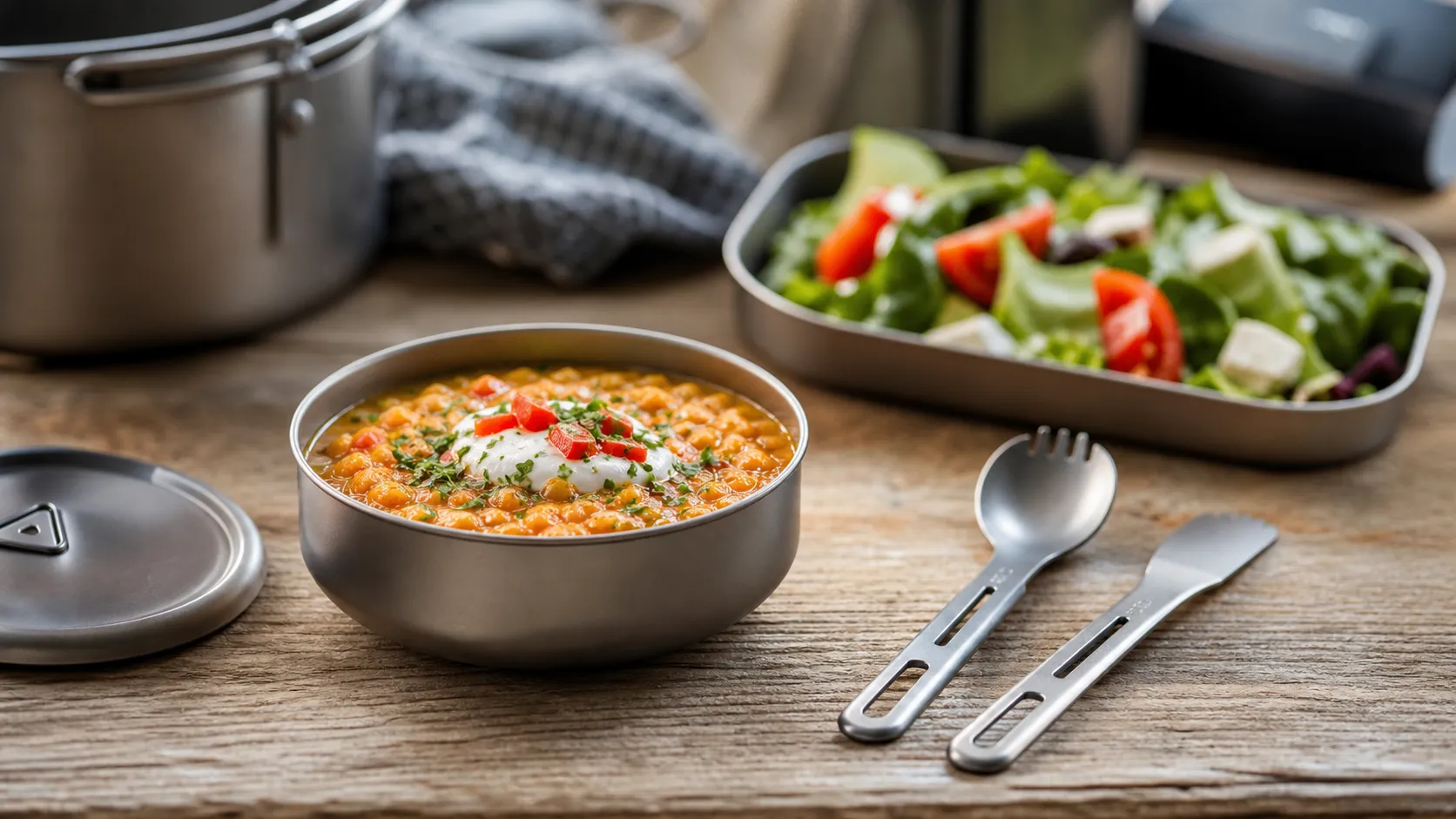
For weight-focused hikers, titanium camping cookware is a practical option. A compact titanium pot or titanium mess kit can reduce pack weight without relying on fragile cookware.
- Titanium: best for low-weight backcountry cooking gear
- Aluminum: a balanced option for cooking control
- Stainless steel: better suited to users who prioritize toughness over low weight
Durability and Value
Titanium resists corrosion and handles regular outdoor use well. Its higher upfront cost can make sense for hikers, bikepackers, and travelers who carry cookware often and want a long-lasting lightweight setup.
Aluminum can offer strong cooking performance at a lower entry cost, while stainless steel remains a dependable choice for rugged use. For brands developing lightweight cookware collections, our cookware brand solutions support product-focused titanium cookware planning.
Key Features in Titanium Camping Cookware
When we select titanium camping cookware, we focus on practical fit, safe handling, and compact packing. A well-planned titanium cookset should match the trip, stove setup, and number of campers.
| Feature | What to Check | Why It Matters |
|---|---|---|
| Pot size | Choose capacity for solo meals or shared cooking | Avoid carrying a pot that is too small or unnecessarily large |
| Folding handles | Check for secure folding handles and comfortable grips | Makes hot pots easier to handle |
| Silicone sleeves | Look for removable or well-fitted sleeves where needed | Adds grip and helps reduce direct contact with hot surfaces |
| Lid design | Consider a secure lid, strainer holes, and clear volume marks | Supports easier boiling, draining, and portion control |
| Nesting design | Confirm the pot, stove, and fuel canister fit together | Saves valuable space in a backpack |
Sizing for Solo and Group Trips
For solo backpacking, a compact pot is usually the most efficient choice for hot drinks and simple meals. Group trips often need larger cookware or multiple pieces to keep meal preparation moving. The right titanium mess kit should fit your real cooking habits—not just look compact on a product page.
Handles, Lids, and Packed Storage
Small design details make lightweight camp stove cookware more usable in the field:
- Folding handles help reduce packed size.
- Silicone grips can improve handling when cookware is hot.
- Strainer lids simplify draining water without extra tools.
- Volume markings help with measured meals and drinks.
- Nesting layouts can hold compatible stoves or gas canisters inside the pot.
For brands building a focused outdoor range, our solutions for outdoor and camping brands support cookware concepts designed around real packing and cooking needs.
How to Cook with Titanium Camping Cookware Without Burning Food
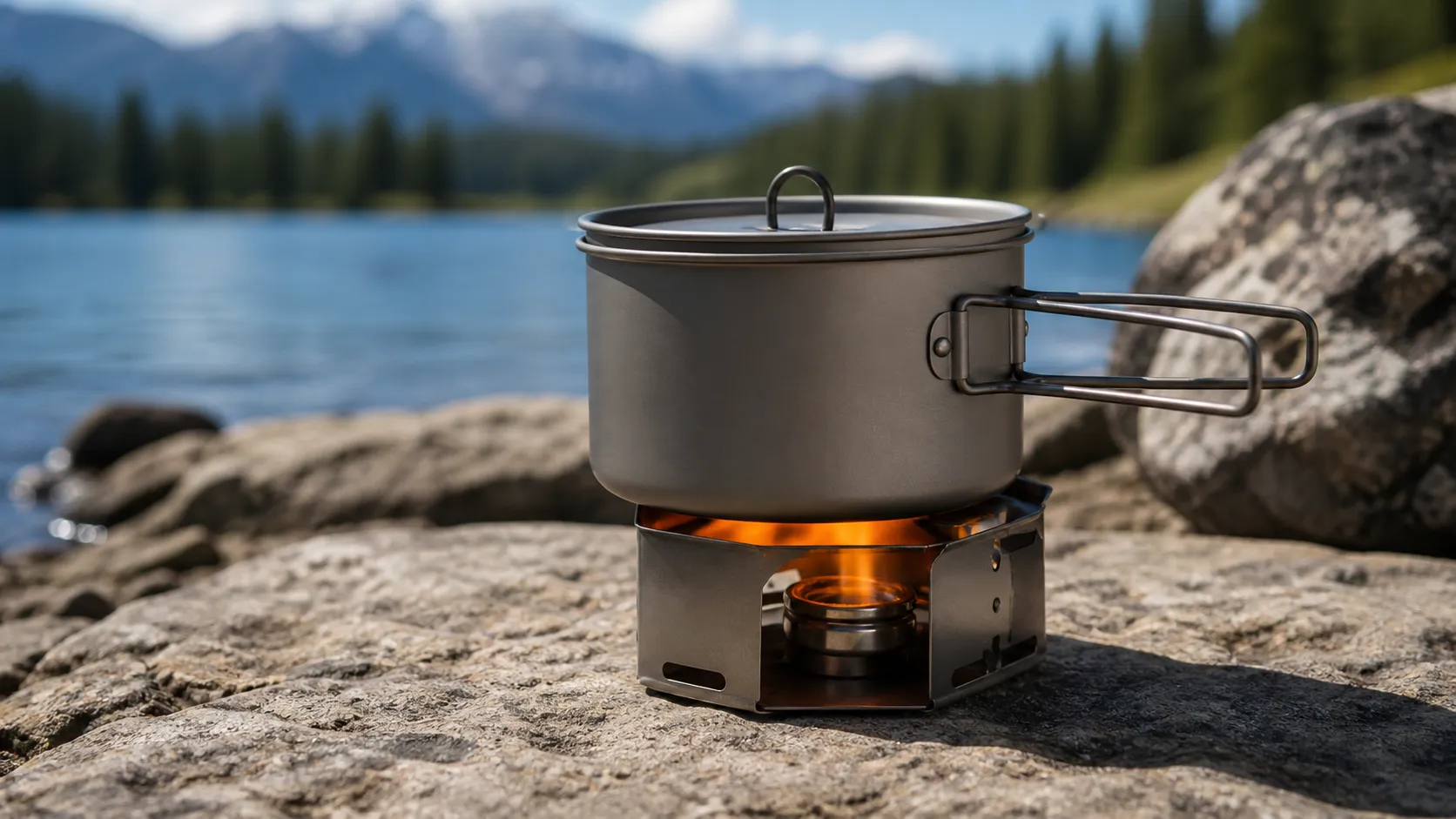
Titanium camping cookware heats quickly, so we use a lower flame than we would with heavier cookware. This helps control hot spots, especially on high-output canister stoves. Keep the flame under the base of the pot or pan rather than letting it climb the sides.
Control Heat on Canister Stoves
For better results with an ultralight backpacking pot:
- Start on low heat and increase only when needed.
- Stir often when cooking oats, rice, sauces, or other thicker meals.
- Add enough liquid before heating food.
- Move the pot briefly off the flame if food begins to stick or cook too fast.
- Use a wider, stable stove support to keep the pot centered over the burner.
Boiling vs. Simmering Trail Meals
Titanium cookware is especially practical for boiling water for coffee, tea, dehydrated meals, and simple camp food. Simmering takes more attention because thin titanium transfers concentrated burner heat directly to the cooking surface.
For meals that need a steady, gentle simmer, reduce the flame to its lowest setting and stir consistently. A pot from our titanium camping pots collection works well for water-based meals when heat is managed carefully.
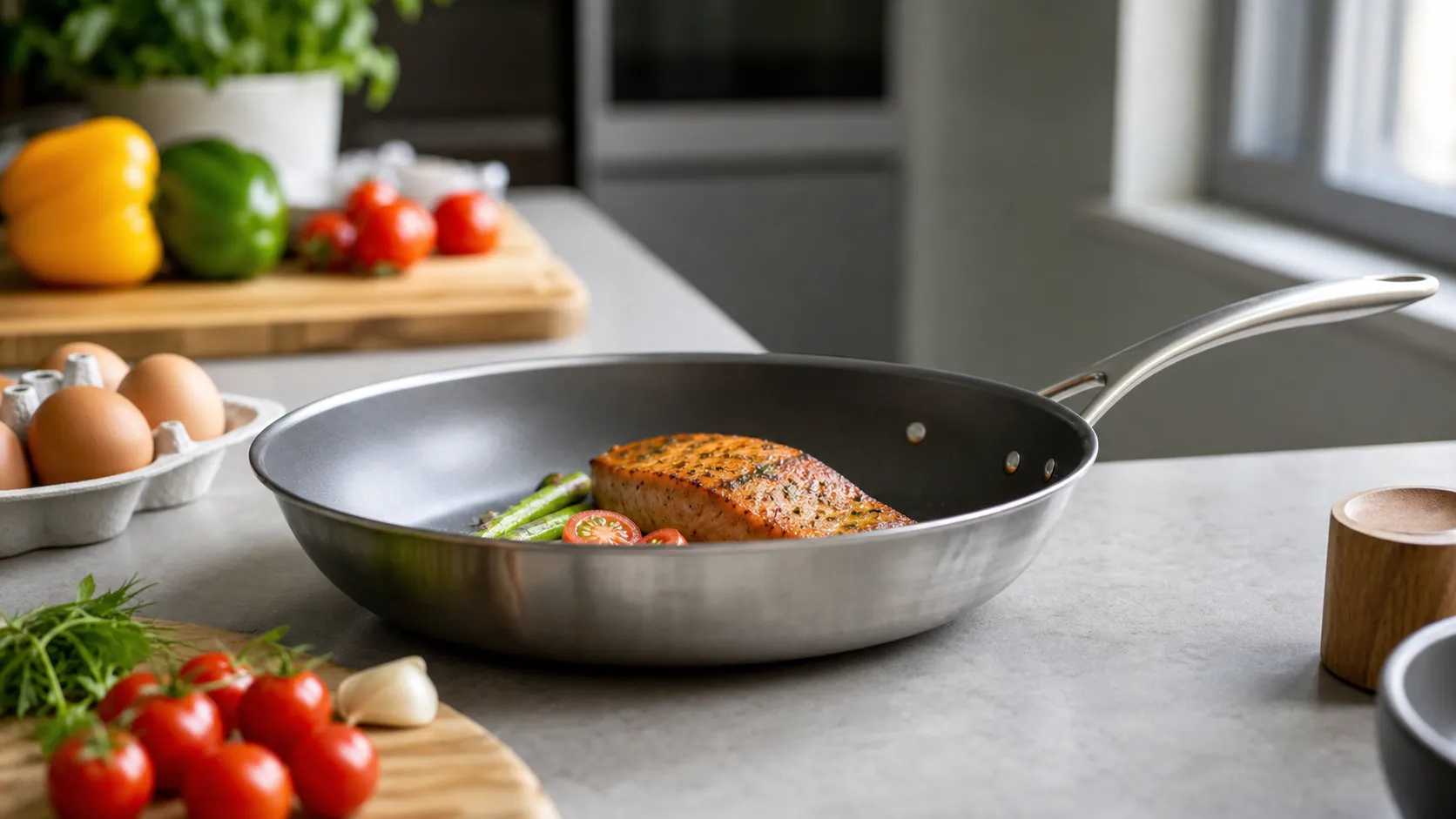
Use a Heat Diffuser for Frying
A camp stove heat diffuser spreads burner heat more evenly beneath titanium cookware. It can help when frying, reheating dense foods, or preparing more detailed backcountry meals. Keep expectations practical: titanium is best for fast, efficient cooking rather than long, high-heat frying.
For a more organized cooking setup, titanium nesting cookware sets keep pots and related camp gear compact for travel.
Care Tips for Titanium Camping Cookware
Remove Burnt-On Food Gently
Keep cleaning simple to protect your titanium camp pots. Soak burnt-on food in warm water first, then lift it away with a soft sponge or cloth. Avoid harsh abrasives and aggressive scrubbing, which can leave unnecessary surface marks.
- Let the pot cool before cleaning.
- Soak stubborn residue instead of scraping it dry.
- Use mild soap when needed.
- Dry the pot after washing.
Field Cleaning on the Trail
For quick trail cleanup, use a small amount of water and a soft cloth, sponge, or dedicated camp scrubber. Wipe the pot dry before packing to keep the rest of your gear clean. Pairing titanium camping cookware with compact camping accessories helps keep your backcountry kitchen organized.
Prevent Rainbow Marks and Store Properly
Rainbow discoloration can appear after high heat exposure. It is generally a surface change, but we recommend using controlled heat and avoiding empty-pot heating where possible. For long-term storage, clean and fully dry each piece, then store it in a dry place with lids and handles protected from unnecessary pressure.
Frequently Asked Questions About Titanium Camping Cookware
Can titanium cookware go over an open campfire?
Check the product’s care guidance before using titanium camping cookware over an open flame. Campfires can create uneven, intense heat and leave heavy soot on the pot. A controlled camp stove is generally easier to manage for everyday backcountry cooking.
Why does food stick to titanium pans?
Titanium pans can develop hot spots quickly, especially on high-output stoves. Keep the flame low, preheat gently, and use enough oil or water for the meal. Titanium cookware is often best suited to boiling water and simple trail meals rather than delicate frying.
Which gas canisters fit inside titanium pots?
There is no single standard fit. Canister nesting depends on the pot’s internal diameter, pot shape, stove size, and canister dimensions. Always check measurements and pack only a cool, closed fuel canister. For model-specific compatibility details, use our cookware contact page.
Is titanium camping cookware worth the cost?
Titanium camping cookware can be a practical choice when low pack weight, durability, and simple cooking matter most. We recommend comparing capacity, nesting design, handle comfort, and how often you cook beyond boiling water before choosing a titanium cookset.
 Chinese