
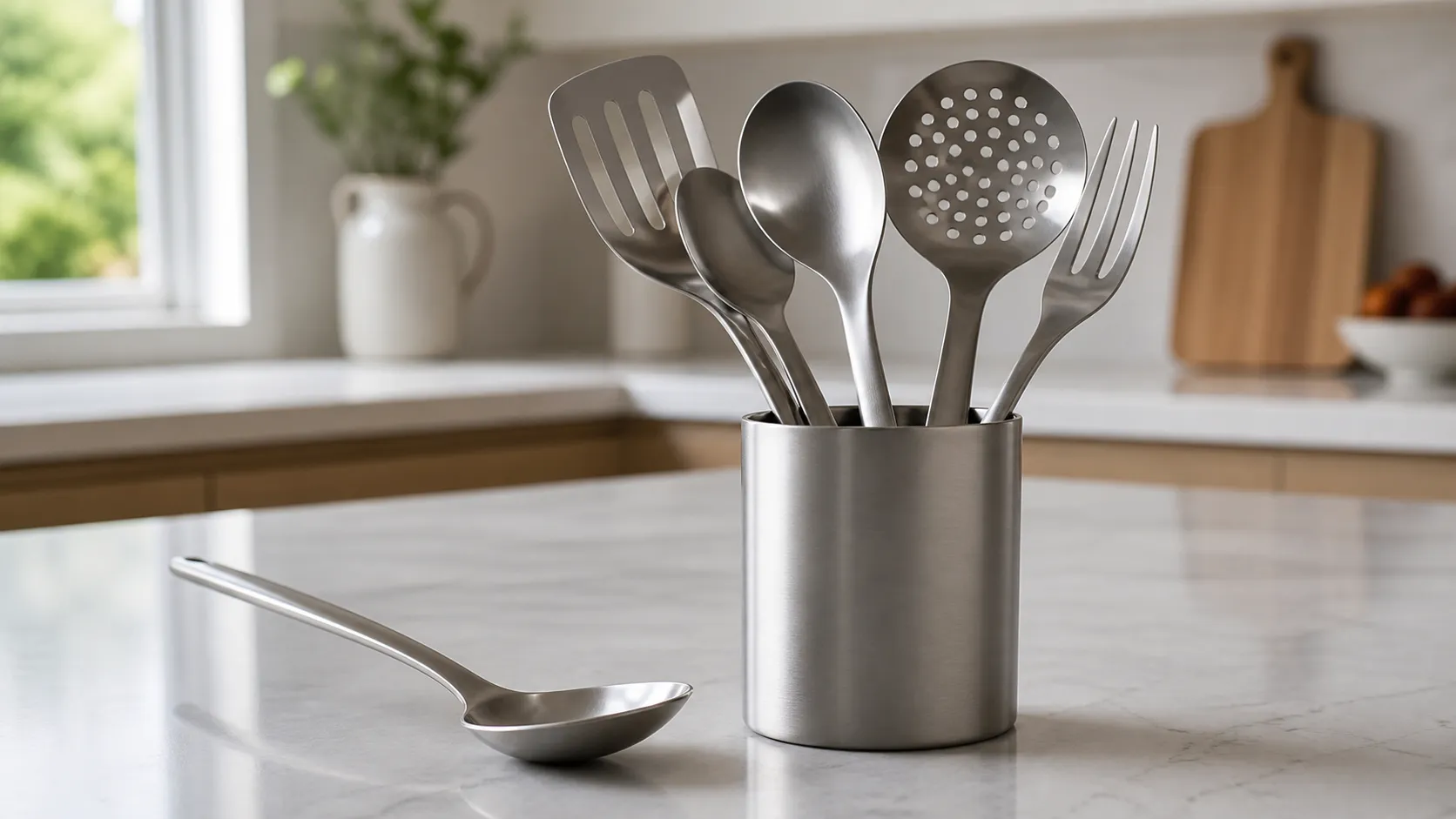
What Makes Titanium the Superior Choice for Eating and Cooking Utensils?
When we evaluate materials for high-performance cookware and daily dining, titanium stands far above traditional metals. It combines unmatched material safety, pure taste preservation, and structural resilience into an ultralight profile.
Biocompatible Food-Grade Metal Safety
Titanium is completely non-reactive with organic matter. This extraordinary property is why medical professionals trust it for critical implants—the human body simply does not reject it.
- Passive Oxide Layer: The moment titanium exposes itself to oxygen, it forms a microscopic, highly stable titanium dioxide barrier.
- 100% Food-Safe: This natural shield prevents metal ions from leaching into hot food or acidic liquids, creating a truly non-toxic dining surface.
Flavor-Neutral Eating Tools with Zero Metallic Taste
Standard aluminum and iron tools frequently react with food, leaching an unwelcome metallic twang into acidic dishes. Pure titanium cutlery remains completely inert.
- Pure Flavor Preservation: Leaves zero residual metallic flavor on your palate.
- Non-Oxidizing: Never reacts with ingredients, keeping delicate sauces and hot meals tasting exactly as prepared.
Unmatched Strength-to-Weight Ratio
Titanium provides the rugged structural integrity of high-grade steel at nearly half the weight. It eliminates the bend risk common in lightweight aluminum tools while remaining remarkably light in hand.
- Ultralight Profile: Delivers high-grade durability at a fraction of steel's heft.
- Zero Flex or Deformation: Handles heavy kitchen prep and high-heat cooking without bending, breaking, or warping.
Titanium Utensils in the Kitchen: A Health-First Upgrade for Home Cooks
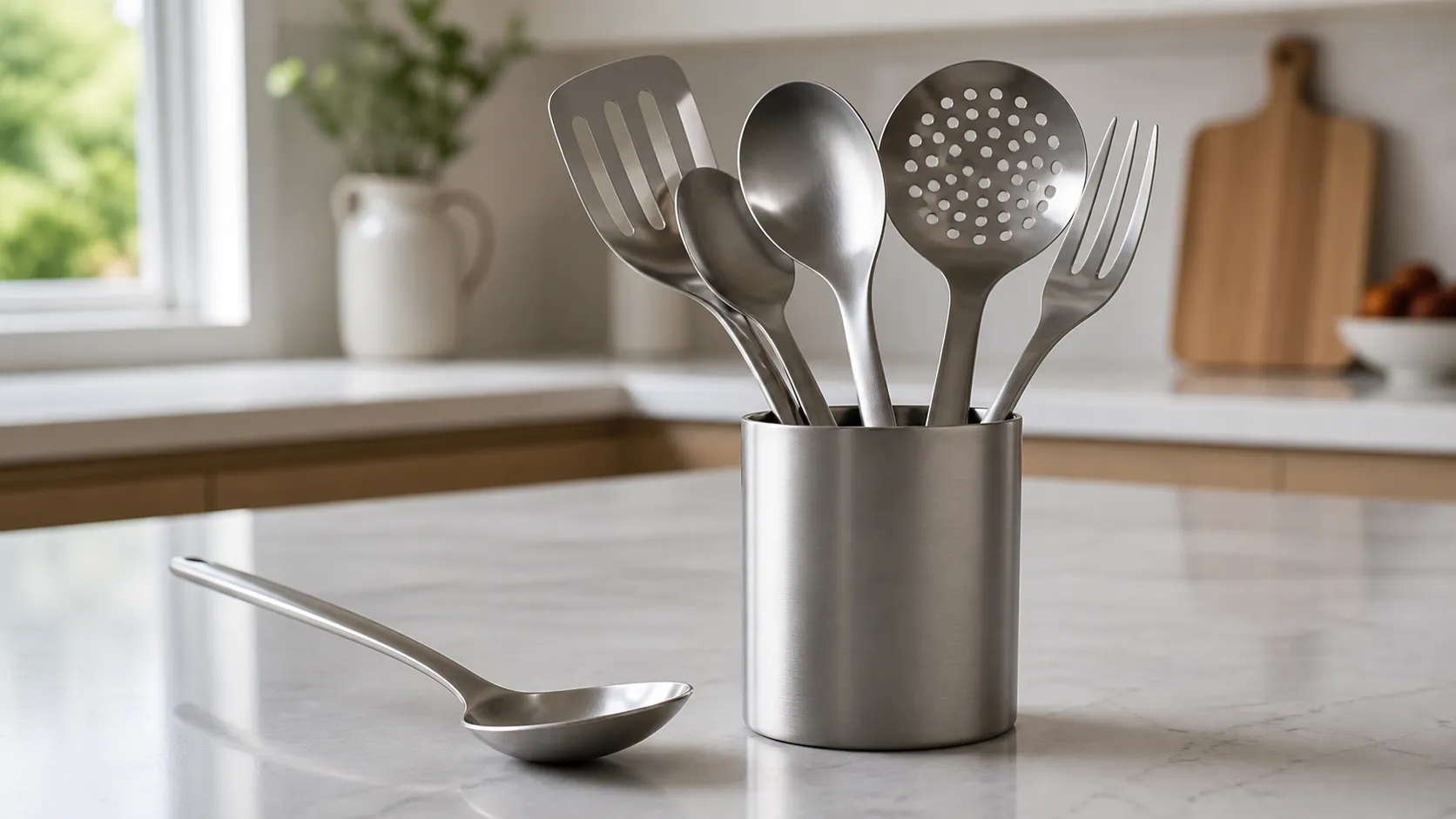
Eliminating Microplastics and Chemical Leaching
Melting plastic spatulas and degrading silicone tools constantly risk flaking microscopic toxins and microplastics into daily meals. We engineer our titanium utensils as a permanent, non-leaching alternative to safeguard your cooking. Pure titanium is completely non-porous and chemically inert, making our line of chemical-free kitchenware completely safe from leaching chemicals or heavy metals into food, no matter how long it stays in the pot. Exploring our dedicated titanium cutlery tools provides home cooks with a durable, non-toxic foundation for safer meal prep.
Non-Reactive Performance with Acidic Foods
Simmering high-acid ingredients like marinara sauces, lemon glazes, or vinegar reductions can degrade lower-grade metals, contaminating dish flavors with a metallic tang. Titanium offers complete immunity to acid erosion:
- Zero Flavor Alteration: Keeps delicate ingredients, sauces, and soups pure and untainted.
- Stable Passive Shield: The natural oxide layer resists chemical attack from salts and acids.
- True Non-Reactive Cooking: Serves as the ultimate non-reactive cooking tools for raw prep and long simmers alike.
High Heat Resistance Without VOCs
Standard kitchen utensils soft-melt or release harmful volatile organic compounds (VOCs) when rested against hot pan rims. Titanium easily handles extreme direct heat without scorching, softening, or warping.
- No Warping or Scorching: Maintains structural integrity under intense skillet heat.
- Zero Fumes: Releases no harmful gases or off-gassing chemicals when exposed to high temperatures.
- Engineered Safety: Offers maximum heat resistance for heavy-duty daily cooking.
Titanium Utensils in the Field: The Gold Standard for Ultralight Outdoor Gear
When ounces equal miles, pure titanium utensils are the undisputed champion of backcountry meal prep. We design trail gear that withstands rugged outdoor environments while keeping pack weights as light as possible.
Essential Utensil Styles for Trail & Camp
We engineer specific builds to match the demands of minimalist wilderness travel:
- Ultralight Camping Spork: The ultimate 2-in-1 hybrid tool that combines spoon volume with fork tines to maximize trail efficiency.
- Long Handle Titanium Spoon: Specially engineered to reach deep into freeze-dried food pouches without leaving grease on your knuckles.
- Folding Cutlery & Chopsticks: Space-saving, collapsible options built for compact cookware nesting and streamlined pack organization.
From custom gear builds to complete outdoor kit projects, these designs eliminate unnecessary bulk without sacrificing utility.
Built for Extreme Trail Ruggedness
Environment and weather destroy lesser materials, but titanium remains virtually indestructible in the backcountry:
- Complete Corrosion Resistance: Immune to rust from torrential rain, ambient moisture, and salty ocean water.
- High Impact Durability: Handles heavy pack pressure, accidental drops, and rough trail abuse without snapping or bending out of shape.
- Thermal Stability: Safe for direct campfire exposure and extreme sub-zero cold without degradation.
For gear manufacturers and outdoor and camping brands, titanium delivers the ultimate balance of permanent durability and ultralight weight.
Titanium vs Stainless Steel, Aluminum, and Silicone Utensils
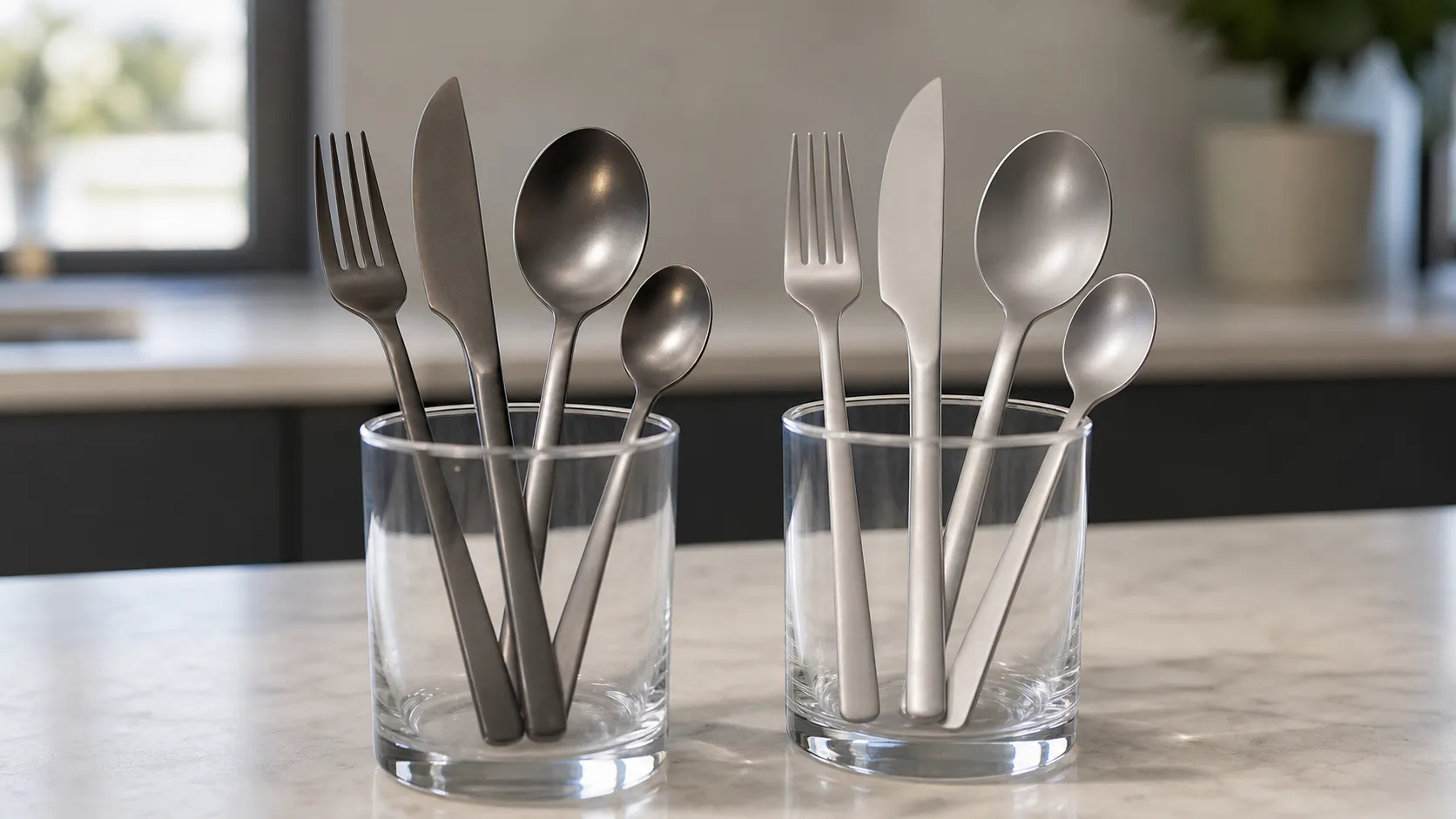
We constantly test eating and cooking tools to see how they perform under high heat, acidic ingredients, and heavy outdoor use. Comparing titanium utensils against traditional alternatives highlights why pure metal purity makes all the difference in safety, weight, and overall longevity.
Evaluating the raw materials and finishes used in kitchenware helps demonstrate how titanium outclasses standard cookware alloys across every critical metric.
Material Feature Comparison Table
| Feature | Pure Titanium | Stainless Steel | Aluminum | Silicone / Plastic |
|---|---|---|---|---|
| Weight | Ultralight (45% lighter than steel) | Heavy | Light | Very Light |
| Safety & Non-Leaching | 100% Non-Toxic (Biocompatible) | Safe; slight risk of nickel leaching | High leaching risk with acidic food | Microplastic & chemical heat risk |
| Corrosion Resistance | Impervious (Rust & acid-proof) | Moderate (Pits or rusts over time) | Low (Oxidizes quickly) | Degrades under UV and heat |
| Flavor Impact | 100% Flavor-Neutral | Minor metallic taste potential | Strong metallic taste risk | Absorbs food odors and oils |
| Overall Lifespan | Lifetime durability | High (Subject to wear/rust) | Low (Bends and corrodes easily) | Short (Melts, tears, and cracks) |
Material Breakdown
- Titanium vs Stainless Steel Utensils: Titanium matches high structural strength at nearly half the weight, completely eliminating rust potential and any lingering metallic aftertaste.
- Titanium vs Aluminum: Aluminum is lightweight, but it bends under pressure and reacts quickly with acidic foods. Pure titanium stays completely non-reactive regardless of what you are cooking.
- Titanium vs Silicone & Plastic: Plastic tools warp, melt, and release unwanted compounds over direct heat. Switching to pure titanium cutlery gives you a permanent, corrosion-resistant eating tool set that never degrades or leaches chemicals into your food.
Key Factors When Buying Titanium Utensils
Not all gear is built to the same standard. As a company that provides titanium utensils, we always advise looking beyond raw aesthetics to evaluate three core engineering details before choosing your set.
Material Purity: Grade 1 vs. Grade 2 Titanium
- Grade 1 Pure Titanium: The softest, most ductile unalloyed grade. It delivers maximum corrosion resistance and absolute biocompatibility for non-toxic food contact.
- Grade 2 Pure Titanium: The gold standard for durability. Grade 1 pure titanium and Grade 2 offer identical food safety, but Grade 2 adds extra tensile strength to prevent slim handles from flexing during heavy use.
- Avoid Industrial Alloys: Ensure you are getting Commercially Pure (CP) titanium rather than lower-grade structural alloys that may contain unwanted metal additions.
Surface Finishes: Polished Bowl vs. Matte Handle
- Polished Eating Surfaces: A smooth, mirror-polished spoon bowl or fork tine eliminates the gritty, chalky texture associated with raw metal, providing a clean mouthfeel and effortless cleaning.
- Sandblasted Matte Finish Titanium Handles: A micro-textured, sandblasted handle guarantees a firm, non-slip grip even when handling hot food with wet or gloved hands.
Ergonomics and Structural Engineering
- Bowl Geometry: Look for generous, functional bowl depth on spoons rather than flat designs, ensuring effortless scooping alongside your favorite titanium bowls.
- Handle Thickness: Check the center spine thickness. Quality stamping or forging prevents structural bending while keeping the overall weight minimal.
- Deburred Edges: Precision-machined edges must be thoroughly rounded to ensure they never scratch cookware or feel harsh during eating.
Manufacturing Excellence: Why Mutian Leads Titanium Utensil Production
At Mutian, we set the standard for high-performance titanium gear. As a dedicated manufacturer, we are a company that provides titanium utensils engineered to meet the highest performance standards for both outdoor equipment brands and high-end kitchenware lines.
Precision Stamping and Forging Technology
Working with pure titanium requires specialized metallurgy expertise. Titanium behaves differently than standard steel or aluminum, demanding high-precision pressure and thermal control during production.
- High-Purity Raw Materials: We use only certified, high-grade raw titanium to eliminate surface flaws, micro-fissures, and structural weak points before processing begins.
- Precision Pressing: Our advanced stamping dies shape ultra-durable titanium utensils with clean contours without weakening the structural integrity of the metal.
- Flawless Surface Integration: Advanced cold-forging eliminates micro-burrs, creating a smooth finish that rejects dirt, food particles, and bacteria buildup.
Rigorous Quality Control and OEM/ODM Capabilities
As a trusted Mutian titanium utensil manufacturer, we partner with global brands to bring custom cookware and cutlery concepts to life. Every batch goes through strict manufacturing quality inspection protocols to ensure perfect dimensional accuracy and surface purity.
Through our flexible OEM/ODM capabilities, we deliver tailored solutions built around exact partner specifications:
- Precise Weight Calibration: Crucial for ultralight trail gear, ensuring exact gram-for-gram consistency across mass production runs.
- Custom Design & Ergonomics: Tailored handle geometry, bowl depths, and finish options—from polished eating surfaces to sandblasted matte handles.
- Strict Food-Grade Compliance: 100% non-toxic, chemical-free production that meets international food-safety and biocompatibility requirements.
Care, Maintenance, and Longevity Guidelines
We build our titanium utensils to outlast standard kitchenware, but a few simple habits will keep them looking pristine whether you use them at home or on the trail.
Daily Cleaning
- Dishwasher Compatibility: Our pure titanium cutlery easily handles high-heat dishwasher cycles and standard detergents without oxidizing, pitting, or rusting.
- Effortless Handwashing: Warm water and basic dish soap are all you need. Because titanium is non-porous, oil and food residues slide off without trapping stubborn odors or grease.
- Quick Drying: Titanium dries rapidly without leaving deep water stains, ensuring easy upkeep for your daily titanium tableware setup.
Preventing Cosmetic Scratches
- Use Soft Sponges: Stick to soft nylon sponges, silicone scrubbers, or microfiber cloths to preserve both polished eating surfaces and sandblasted matte handles.
- Avoid Steel Wool: Skip abrasive steel wool pads and heavy metal scrubbers. While aggressive scouring won't compromise the metal's strength, it can mar the exterior finish.
- Smart Storage: Pack your corrosion-resistant eating tools in a dedicated mesh pouch or cutlery drawer to prevent unnecessary metal-on-metal abrasion during travel.
Understanding Thermal Rainbow Discoloration
Exposing titanium to high cooking temperatures or direct campfire flames causes a harmless oxide layer to expand, creating a bright rainbow patina (hues of blue, purple, and gold).
- 100% Safe & Non-Toxic: Heat patina is purely an optical reaction to light. It does not leach chemicals, degrade the metal, or alter food-grade safety.
- Restoring Original Polish: If you prefer the original silver finish, simply apply a baking soda paste or a gentle acidic cleaner like vinegar, then wipe smooth with a soft pad.
 Chinese