
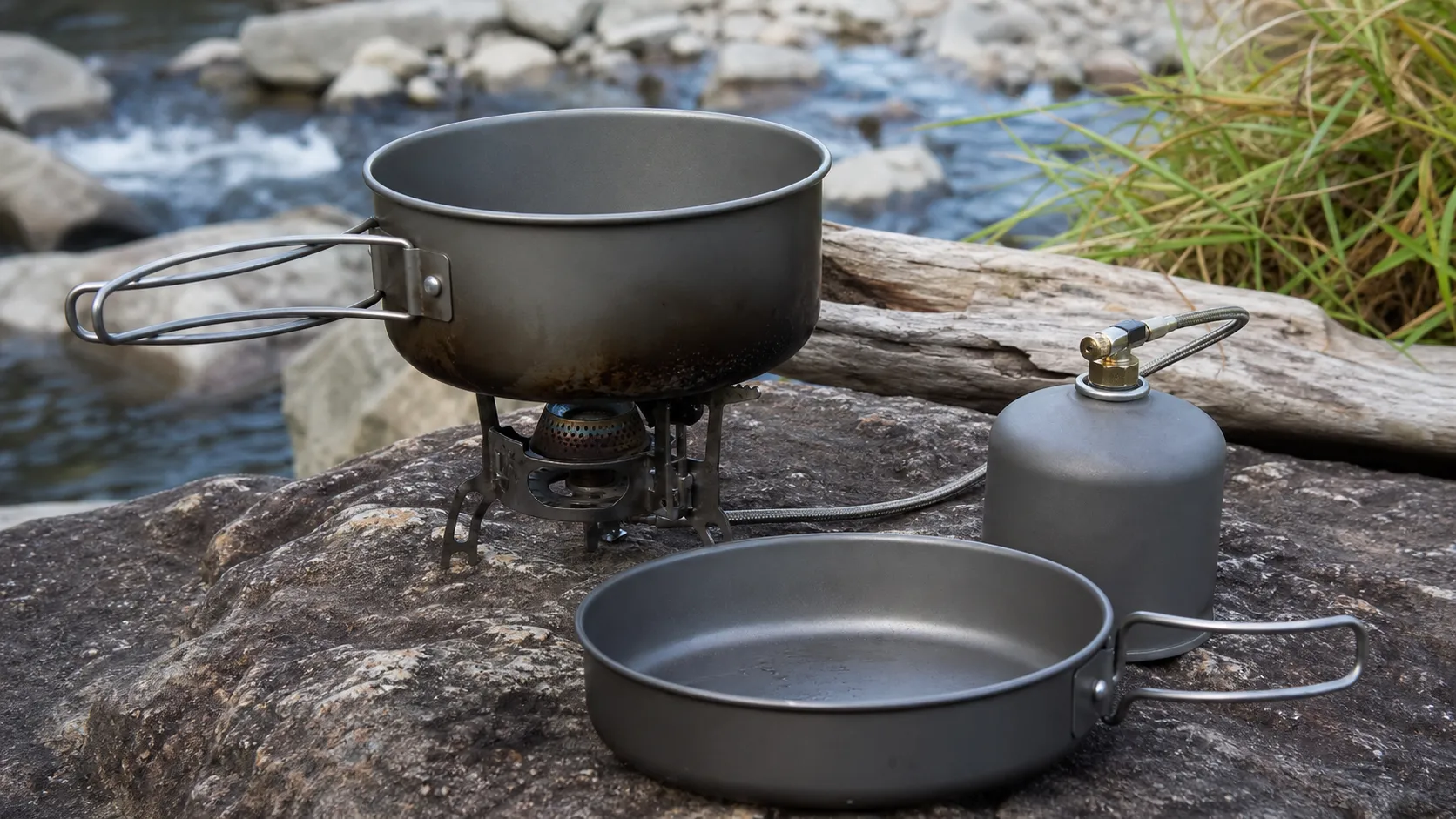
What Is Titanium Outdoor Cookware?
Titanium outdoor cookware is lightweight camp kitchen gear made for carrying, heating water, and preparing simple meals outside. It is widely used in backpacking and hiking because titanium delivers a high strength-to-weight ratio, resists corrosion, and holds up well through repeated outdoor use.
Common titanium camping cookware includes:
- Titanium camping pots for boiling water and one-pot meals
- Titanium camping kettles for coffee, tea, and hot water
- Titanium fry pans for light camp cooking
- Titanium mugs and cups for drinks and compact meal prep
- Nesting cooksets that pack together to save space
- Camping mess tins for simple food storage and cooking
For weight-conscious outdoor cooks, titanium offers a practical balance of low pack weight, dependable strength, and long service life. Its rust-resistant surface also makes it a reliable material for wet, humid, and changing outdoor conditions.
Benefits of Titanium Outdoor Cookware
For backpacking, hiking, and long-distance travel, every gram matters. Titanium outdoor cookware keeps packed weight low while providing a durable option for daily trail use. A compact titanium camping pot, mug, or kettle can also nest with selected stoves, utensils, and fuel canisters to save space in a small backpack.
| Benefit | Practical outdoor value |
|---|---|
| Low weight | Helps reduce overall pack weight for solo backpacking and thru-hiking. |
| Compact nesting | Pots, cups, and small cooksets can pack together neatly. |
| Fuel storage compatibility | Many pot shapes can hold selected fuel canisters and compact stove parts. |
| Rust resistance | Suitable for damp camps, rainy trips, and repeated outdoor use. |
| Taste-neutral surface | Helps keep water, coffee, tea, and simple meals tasting clean. |
| Easy cleanup | Usually needs only mild soap, water, and a soft sponge. |
Titanium camp cookware is especially practical for boil-focused meals, coffee breaks, and lightweight one-pot setups. Its corrosion resistance also makes it a dependable material for outdoor gear that may be exposed to moisture during travel and storage.
For brands developing lightweight outdoor cookware, material selection and finishing affect weight, durability, and long-term usability. Our approach to cookware materials and finishes supports product designs built around practical trail use and efficient packing.
Titanium Outdoor Cookware Limitations
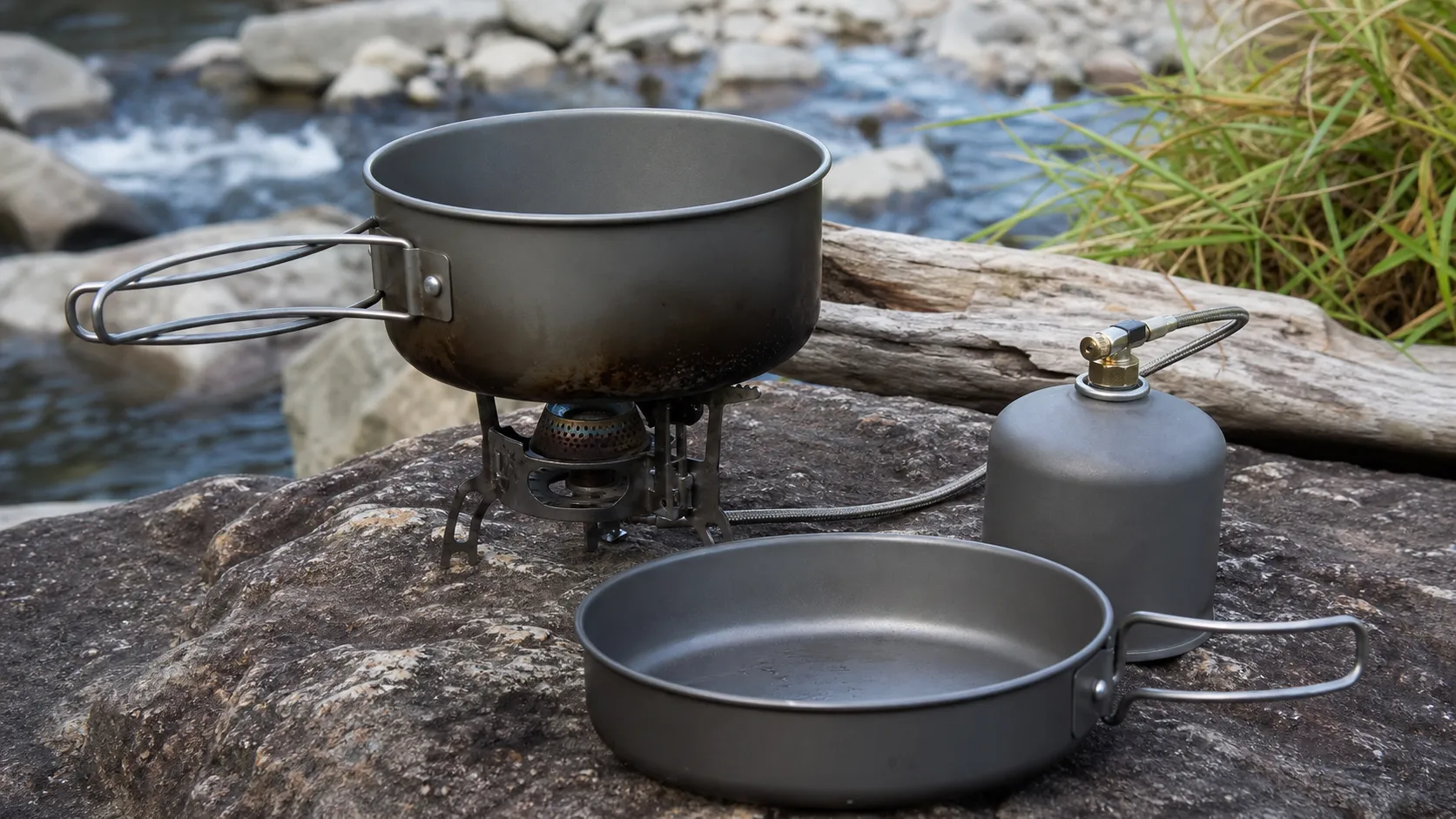
Titanium outdoor cookware saves pack weight, but it does not spread heat as evenly as aluminum. On a compact stove, the center of a thin titanium pot can heat quickly while the edges stay cooler. This can create hot spots and make food more likely to stick or scorch.
For that reason, we see titanium camping cookware work best for:
- Boiling water for coffee, tea, and freeze-dried meals
- Reheating prepared food
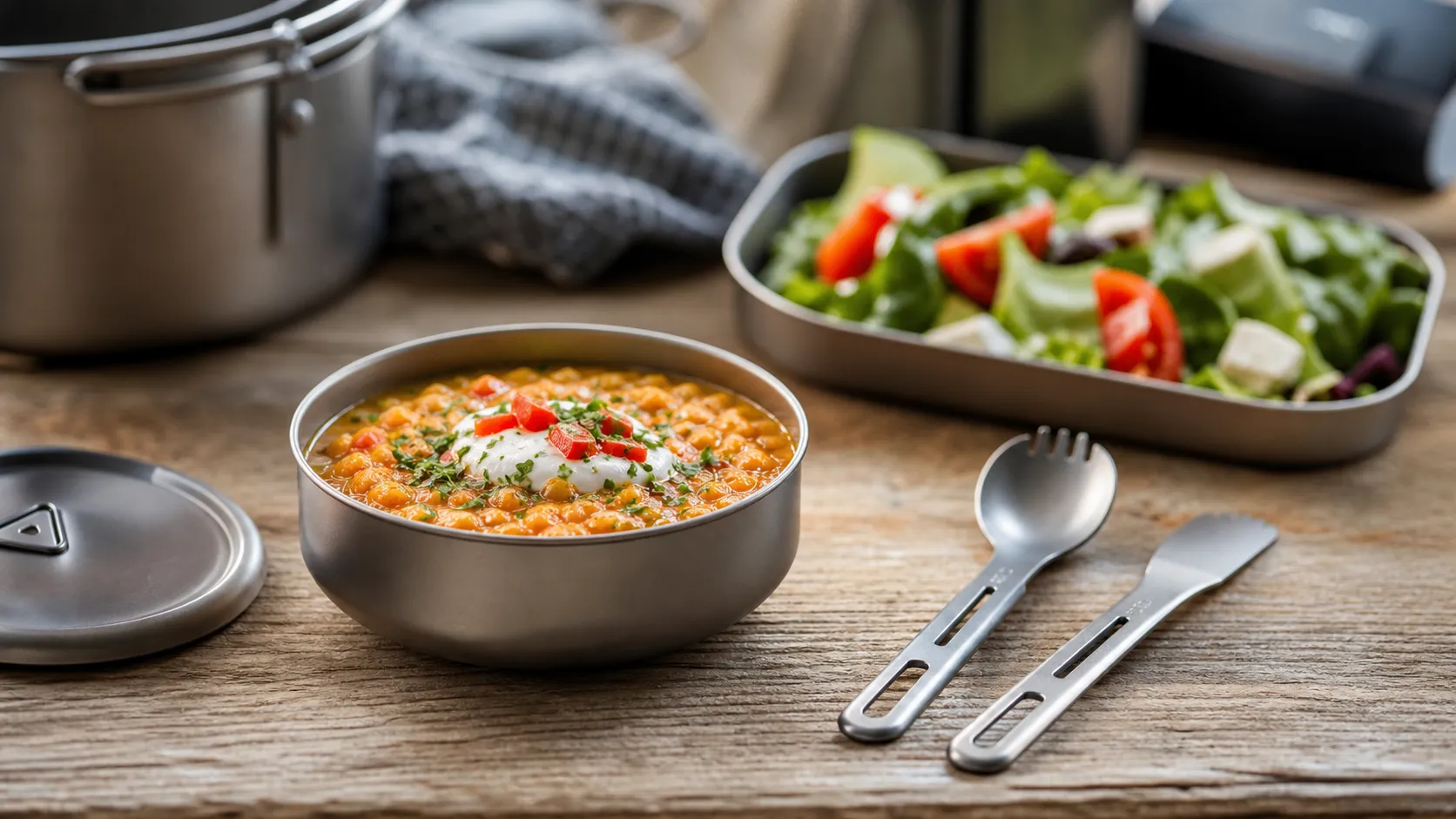
- Making soups, noodles, oats, and other simple one-pot meals
- Lightweight, boil-only backpacking trips
Titanium also usually costs more upfront than aluminum cookware. The tradeoff is low weight, corrosion resistance, and long-term durability, but it is important to choose it for the right cooking style rather than for every camp kitchen.
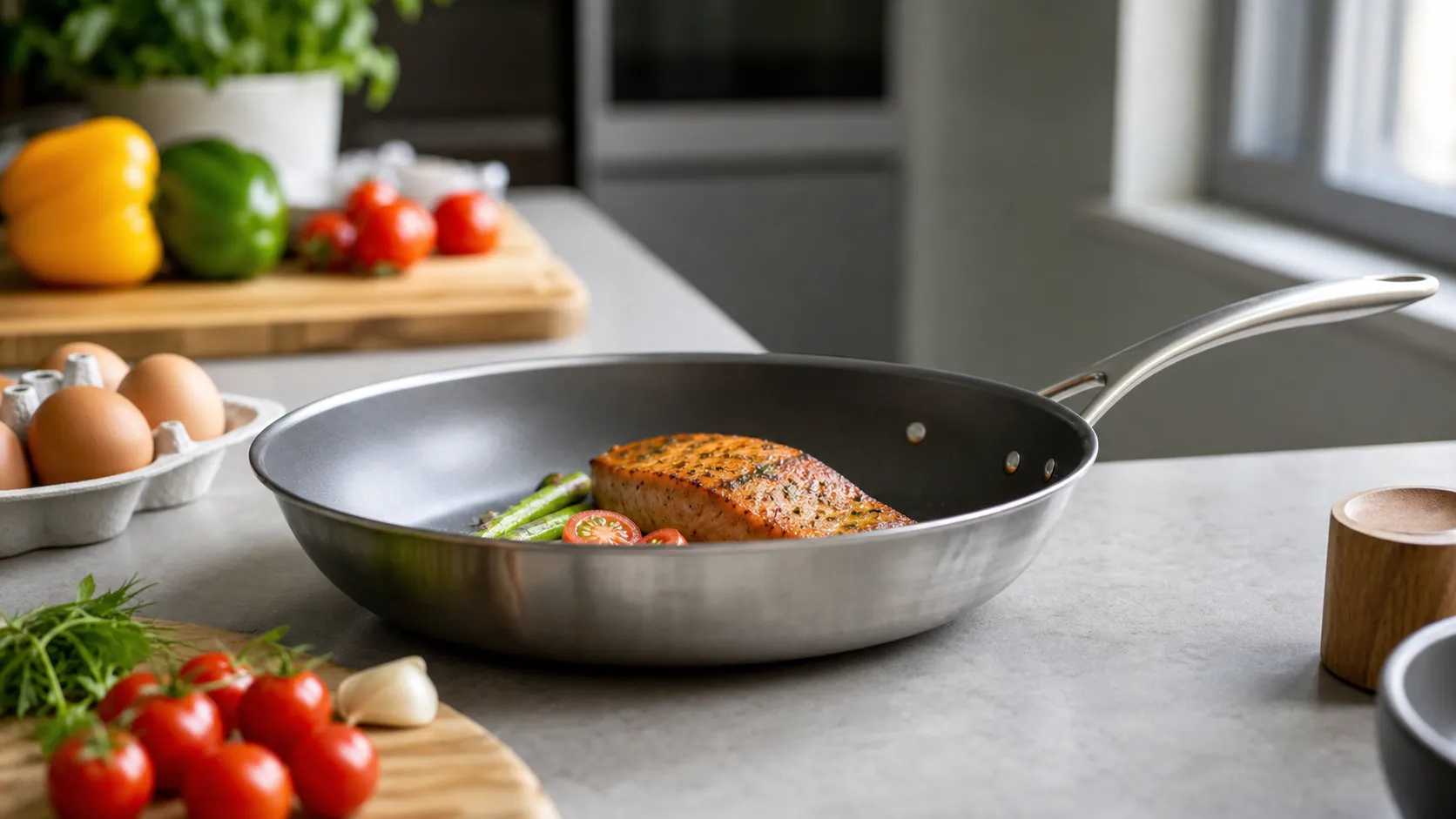
For detailed cooking, frequent frying, or meals that need steady and even heat, aluminum is often the more practical option. It heats more evenly and responds faster to stove adjustments. Stainless steel can also be a better fit for campers who prioritize a sturdier cooking surface and do not mind carrying extra weight. A titanium fry pan can handle simple use, but it is less forgiving for eggs, pancakes, sauces, and other foods that need controlled heat.
Titanium Cookware Specs to Compare Before Buying
We compare titanium outdoor cookware by the details that affect pack weight, cooking space, and daily use on the trail.
- Weight: Check the listed weight in both grams and ounces. A lighter titanium backpacking pot helps reduce total pack weight, especially for solo hiking and long-distance travel.
- Capacity: Match pot volume to your group size. Small pots suit solo meals and hot drinks, while medium pots work better for two people. Group camping often needs greater capacity than a compact cookset can provide.
- Packed size: Look at the full packed dimensions, nesting design, and total space used in your backpack. Nesting camping cookware can keep cups, utensils, and other small cooking items together.
- Fuel canister nesting: Confirm whether the pot can hold your stove, lighter, and fuel canister when packed. A fuel canister nesting pot can make a compact cooking system easier to carry.
- Handles and stability: Folding handles reduce packed size, while fixed handles can offer a simpler setup. Check for secure attachment, stable pot support, and heat-resistant grips where provided.
- Lids and pouring: A well-fitting lid helps retain heat and protect food while cooking. Vented lids, secure lid fit, and controlled pouring are useful details for boiling water and preparing simple meals.
- Construction: Review titanium thickness, smooth edges, finishing quality, and the overall feel of the pot, kettle, mug, or titanium fry pan. Consistent construction supports dependable outdoor use.
- Stove compatibility: Confirm that the cookware is suitable for your cooking setup, including canister, alcohol, wood, or multi-fuel stoves. Pairing cookware with suitable outdoor stoves and barbecue equipment helps create a more practical camp kitchen.
Best Titanium Outdoor Cookware by Camping Style
Solo Backpacking Cookware
For solo trips, we recommend a small titanium backpacking pot or kettle that keeps packed weight low and takes up little room. This setup suits water for coffee, tea, instant meals, and dehydrated food. Pairing it with a compact titanium camping mug can keep your cooking and drinking kit simple.
Two-Person Camping Cookware
Two campers usually need a medium-capacity titanium pot or a nesting camping cookware set. A nesting design helps keep the stove, lighter, utensils, and other small essentials together while reducing loose items in the pack.
Thru-Hiking and Ultralight Trips
For thru-hiking and ultralight backpacking gear, every gram matters. Choose titanium outdoor cookware with low weight, compact volume, and a shape that supports efficient water boiling. A simple pot-and-lid setup is often more practical than a larger cookset.
Basecamp and Car Camping
Titanium still works well at basecamp when durability, rust resistance, and easy packing matter. However, capacity can be more important than weight for car camping or larger groups. A larger pot may be the better choice when cooking several servings at once.
Boil-Only Cooking
Titanium camp cookware is especially useful for boil-only meals, including:
- Water for coffee or tea
- Dehydrated backpacking meals
- Instant noodles and soups
- Simple hot drinks served in titanium tea cups
- Quick rehydrated meals
One-Pot Meals and Frying
For one-pot cooking, choose a wider titanium pot to make stirring easier and reduce crowding. Titanium fry pans can handle simple cooking, but they are less suited to prolonged high-heat frying because hot spots can develop. Keep meals simple, use moderate heat, and stir regularly for better results.
Titanium vs Aluminum vs Stainless Steel Cookware
The right camping cookware material depends on how you cook and how much weight you can carry. We recommend titanium outdoor cookware when low pack weight, corrosion resistance, and compact storage matter most.
Titanium vs Aluminum Cookware
Titanium camping cookware is lighter and more durable than aluminum. It resists corrosion well and suits backpacking, thru-hiking, and boil-only meals. Its main tradeoff is lower heat conduction, so hot spots can occur when frying or cooking over high heat.
Aluminum cookware generally heats more evenly and is often more affordable. It is a practical choice for campers who cook more involved meals, but it may be less resistant to wear over long-term outdoor use.
Titanium vs Stainless Steel Cookware
Titanium is much lighter than stainless steel, making it easier to carry in a small backpack. Both materials resist rust and handle regular outdoor use well.
Stainless steel is usually better for steady, detailed cooking because it has more weight and can feel more stable on a stove. However, its heavier build is less suitable for ultralight backpacking gear.
| Material | Weight | Heat Performance | Durability | Price | Packability | Best Use |
|---|---|---|---|---|---|---|
| Titanium | Very light | Heats quickly; can create hot spots | High corrosion resistance | Higher | Excellent | Boiling water, coffee, simple one-pot meals, long hikes |
| Aluminum | Light | More even heat distribution | Moderate | Usually lower | Good | Everyday camp meals and light frying |
| Stainless steel | Heavier | Steady performance for cooking | Strong and corrosion resistant | Varies | Moderate | Car camping, detailed cooking, larger meal preparation |
For minimalist travel, a titanium backpacking pot provides the strongest balance of low weight and long service life. For a complete lightweight meal setup, pair it with durable titanium tableware that packs neatly with your cookware.
How to Choose a Titanium Camping Cookware Set
Choose titanium outdoor cookware around your group size, meal style, and available pack space. A lighter set is useful only when its capacity and nesting layout fit the trip.
| Trip type | Practical cookware choice | Capacity guide |
|---|---|---|
| Solo backpacking | One titanium backpacking pot or small kettle | About 750–900 ml / 25–30 fl oz |
| Two-person camping | Medium pot or nesting cookset | About 1.2–1.5 L / 40–50 fl oz |
| Small groups | Larger pot with shared cups or bowls | About 1.8–2.5 L / 60–85 fl oz |
| Long expeditions | Durable nesting cookware with organized storage | Match capacity to daily meal planning |
Pick a Single Pot or Full Cookset
A single titanium camping pot keeps weight and packed volume low. It suits water boiling, coffee, dehydrated meals, and basic one-pot food. A full backpacking cookset adds cups, bowls, lids, or a fry pan, but every piece should have a clear use.
For compact packing, check that the pot can hold essential items such as:
- A compatible fuel canister
- Compact camping stove
- Lighter or matches
- Folding utensil
- Small cleaning cloth
Our camping accessories collection supports practical outdoor packing needs where compact storage matters.
Details That Improve Trail Use
Prioritize simple, reliable features over unnecessary pieces:
- Measurement markings for water and meal portions
- Pour spouts for controlled hot-water pouring
- Locking or folding handles for safer handling and smaller packed size
- Stable, well-fitting lids to support heat retention and reduce spills
- Stuff sacks to keep titanium cookware together and limit scratches
Balance Cost, Packability, and Use
The right titanium outdoor cookware is not always the largest set or the lightest item. Choose a set with consistent construction, secure handles, useful capacity, and efficient nesting for the trips you actually take. For regular supplier quality checks, review our cookware quality inspection approach.
How to Cook With Titanium Outdoor Cookware
Titanium outdoor cookware performs best with low to medium heat. Titanium heats quickly but does not spread heat asevenly as thicker aluminum or stainless steel, so high flames can create hot spots and scorch food.
Best Foods for Titanium Cookware
A titanium backpacking pot is most practical for simple camp meals, including:
- Boiled water for dehydrated meals
- Coffee and tea
- Soups and broths
- Instant noodles and oatmeal
- Rice, pasta, and other simple one-pot dishes
- Reheated prepared meals
For outdoor projects that prioritize compact, trail-ready cooking gear, see our outdoor kit project options.
Simple Cooking Tips
- Add water or food before placing the pot over heat.
- Keep the flame under the base rather than up the sides.
- Stir regularly when cooking thicker foods.
- Use a lid to retain heat when boiling water.
- Never heat an empty titanium camping pot.
Avoid prolonged high heat, heavy frying, and recipes that need precise temperature control. Titanium camp cookware is designed for lightweight, efficient outdoor cooking rather than elaborate frying or long simmering.
How to Clean and Maintain Titanium Cookware
Titanium outdoor cookware is simple to maintain when we clean it promptly and pack it carefully. Let pots, cups, and lids cool fully before washing to avoid handling hot metal and sudden temperature changes.
- Wash after use: Use mild soap, clean water, and a soft sponge or cloth. Avoid abrasive pads that can scratch the finish.
- Remove stuck-on food gently: Soak the titanium camping cookware in warm water first, then wipe away residue without heavy scraping.
- Handle heat marks safely: Light discoloration, heat marks, or oxidation are usually cosmetic. Clean them with mild soap and a soft sponge rather than harsh chemicals.
- Dry before packing: Dry every part completely, including lid rims, folding handles, and nested cups, to keep the cookset clean in storage.
- Nest with care: Place a cloth, paper towel, or soft protective layer between pots and cups when packing to reduce rubbing and scratches.
- Inspect before each trip: Check handles, lid fit, edges, and folding parts for secure operation. A well-maintained titanium backpacking pot should pack neatly and work reliably at camp.
Who Should Buy Titanium Outdoor Cookware?
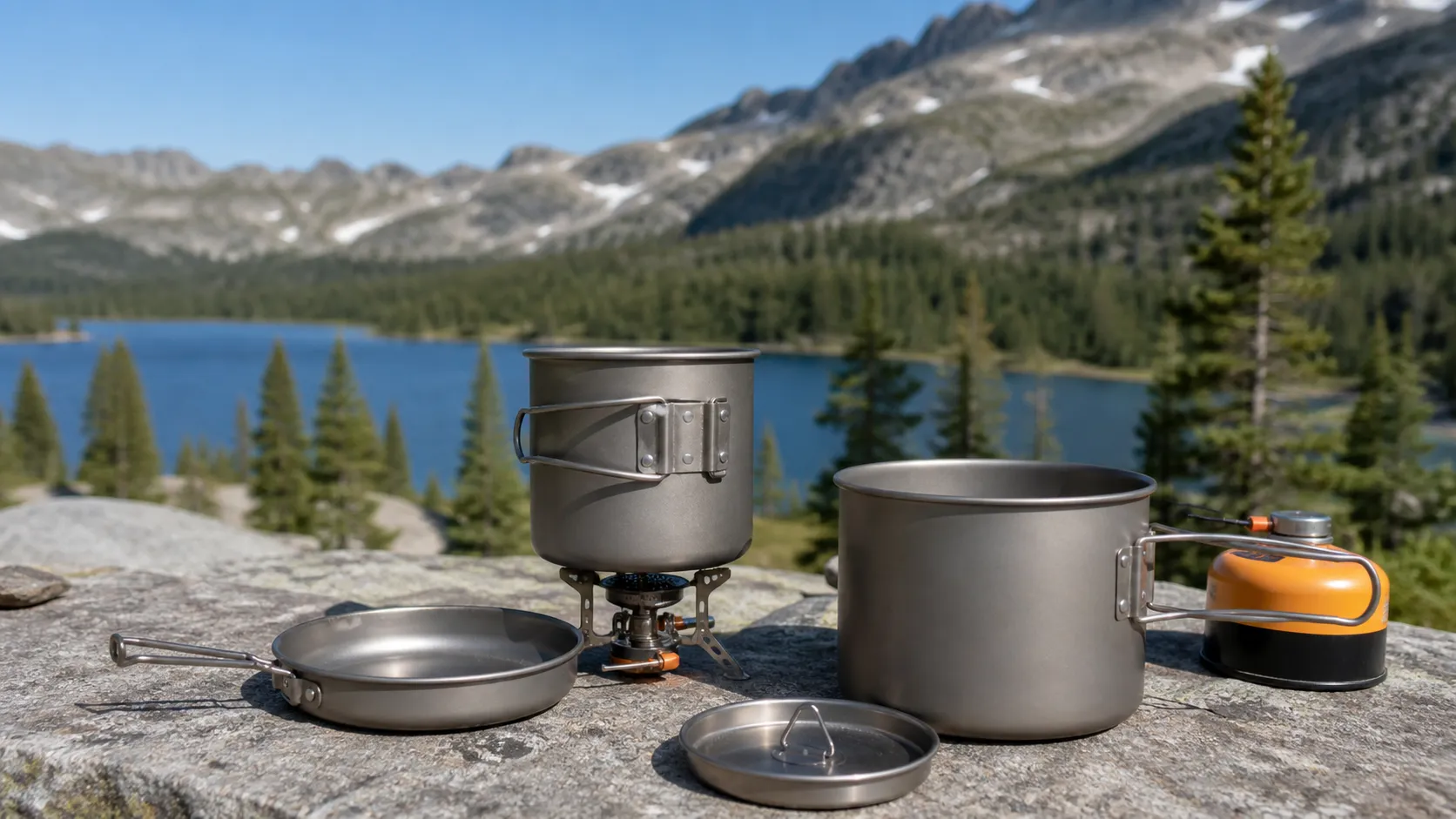
Titanium outdoor cookware is a strong fit for campers who count every gram and need reliable gear that packs small. We recommend it for:
- Backpackers and thru-hikers carrying gear over long distances
- Ultralight hikers who prefer a minimal titanium backpacking pot or compact cookset
- Solo campers and minimalist travelers making coffee, tea, dehydrated meals, soups, or other simple food
- Weight-conscious outdoor cooks who want durable, corrosion-resistant cookware for frequent trips
A nesting titanium camp cookware set can also suit two-person trips when meals stay simple and packed volume matters.
Titanium is less practical for campers who cook detailed meals, fry food often, or need large-capacity pots for family groups. It may also be a poor fit for buyers with a tight budget, since aluminum cookware can provide a lower-cost option for basic camp cooking.
How to Identify High-Quality Titanium Outdoor Cookware
High-quality titanium outdoor cookware should feel light without feeling poorly made. We focus on practical details that hold up during packing, cooking, cleaning, and repeated trail use.
| What to Check | What Good Quality Looks Like |
|---|---|
| Material and finish | Consistent titanium construction, clean finishing, and no rough surfaces |
| Pot edges | Smooth, rolled, or carefully finished edges for safer handling |
| Thickness | Reliable thickness that supports daily outdoor use without unnecessary weight |
| Handles and lids | Secure folding parts, stable lid fit, and easy handling when hot |
| Nesting design | Pots, mugs, and lids that pack together efficiently with minimal movement |
| Trail usability | Low packed weight, compact shape, and straightforward stove use |
Build Quality for Trail Use
A durable titanium backpacking pot needs more than low weight. Check that handles fold smoothly, lids sit securely, and the cookware remains stable on a suitable camping stove. Efficient nesting matters too: a well-designed titanium camp cookware set can keep key items together and reduce wasted pack space.
For product consistency, our quality and compliance approach is an important part of evaluating cookware for long-term supply.
Manufacturer Support and Custom Programs
Reliable supplier support helps retailers and outdoor brands maintain consistent product quality across repeat orders. Clear warranty terms, replacement-part availability, and dependable communication are practical signs of a supplier prepared for long-term cooperation.
We provide titanium outdoor cookware options for OEM and ODM projects, including custom sizes, cookware set configurations, branding, and packaging requirements. Our outdoor cookware product range supports buyers seeking lightweight, trail-focused cookware solutions with practical nesting and packing design.
Titanium Outdoor Cookware FAQs
Is titanium outdoor cookware safe?
Titanium outdoor cookware is suitable for normal camp cooking when used as intended. Follow the product’s care instructions, avoid overheating an empty pot, and use appropriate utensils to help protect the cooking surface.
Does titanium cookware rust?
Titanium is highly corrosion resistant and does not rust like ordinary steel. It can develop heat marks or cosmetic discoloration over time, especially after high heat, but this does not necessarily affect normal use.
Is titanium better than aluminum for camping?
Titanium is usually better for campers who prioritize low packed weight, durability, and simple meals. Aluminum generally spreads heat more evenly, so it can be a better choice for frequent frying or more detailed cooking. The right material depends on how you cook and how much weight you want to carry.
Can you cook eggs in titanium cookware?
Yes, but titanium pots and fry pans can develop hot spots quickly. Use low to medium heat, add oil or water as needed, and stir often. Titanium outdoor cookware is generally more practical for boiling water, soups, and one-pot meals than delicate frying.
What size titanium pot is best for one person?
A solo titanium backpacking pot should hold enough water and food for your usual meal routine while still fitting efficiently in your pack. Consider whether you mainly prepare coffee, tea, dehydrated meals, instant food, or simple cooked dishes—and whether you need room to nest a stove or fuel canister inside.
Does titanium cookware work with all camping stoves?
Stove compatibility depends on the cookware design and the stove manufacturer’s instructions. Many titanium camping pots work well with common canister, alcohol, and wood stove setups, but pot stability, flame size, and heat control matter. Always use a stable cooking surface and avoid flames that extend far beyond the pot base.
Is titanium outdoor cookware worth the higher price?
Titanium outdoor cookware can be worth the higher upfront cost for backpackers, thru-hikers, and minimalist campers who value low weight, compact nesting, and long-term corrosion resistance. For buyers sourcing consistent cookware configurations, reliable outdoor cookware manufacturing also matters when comparing overall value, quality control, and supply needs.
 Chinese